
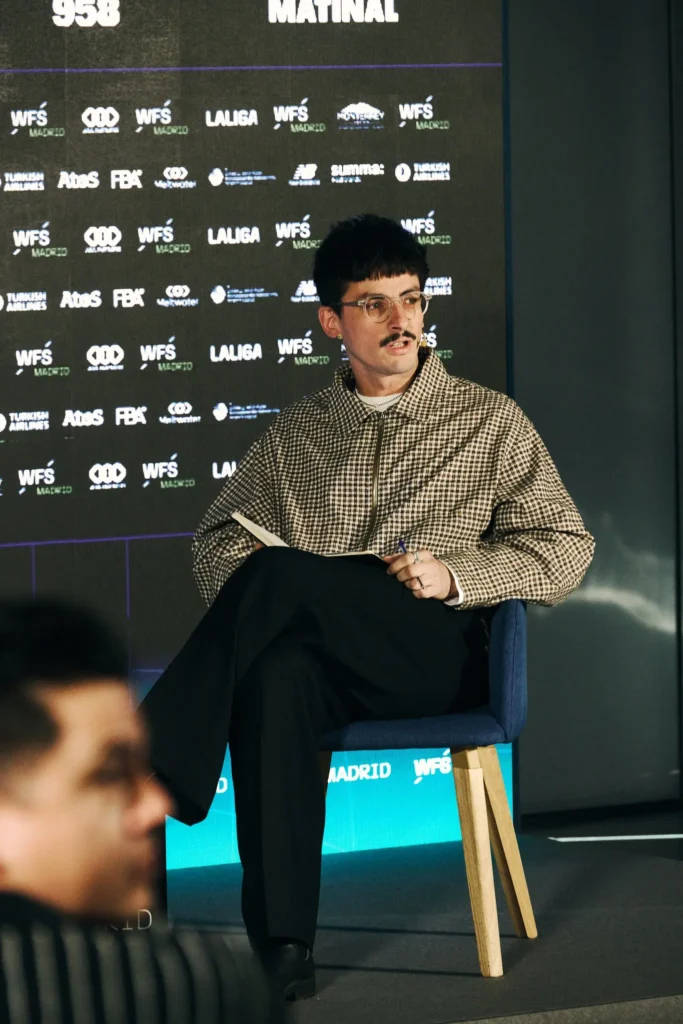
For decades, the equation of success in the football industry was simple: more wins on the pitch, greater brand value. That equation has changed. As Pablo Alzaga, founder of Matinal, noted at World Football Summit Madrid 2025:
“The real turning point is that brand value used to depend exclusively on what happened on the pitch. Suddenly, it also depends on what happens off it.”
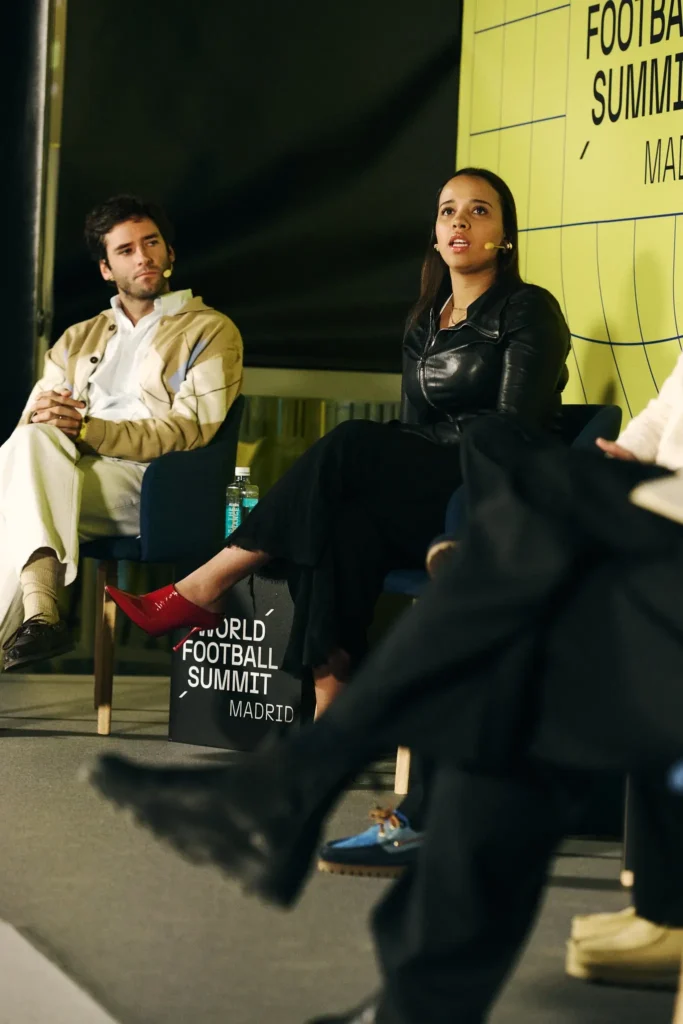
Today, a club’s value is also built through culture, fashion, music and the street. Below, we break down the five factors that explain how and why — drawn from Football & Creativity: New Trends on and off the Pitch, a session hosted by Matinal at World Football Summit Madrid 2025, featuring Cosme Bergareche (Pompeii), Imani Naki (DAR), Pau Pía (25 Gramos) and José Vallejo (958).
1. Clubs as representatives of communities
Football clubs have long been something more than sporting institutions, though not all have known how to operate from that reality.
“Football clubs are brands beyond football. They are brands that represent not just the club itself, but cities and communities,” says Cosme Bergareche, Creative Director at Pompeii, a Spanish fashion brand with a long track record of collaborations with football clubs.
The practical implication is straightforward: betting exclusively on sporting performance is structurally fragile. Players are temporary. The club endures. And what keeps a club present in people’s lives is not the league table but roots, identity and the pride of belonging to a specific community.
2. Building bridges: the intersection with music and fashion
Imani Naki, founder of DAR, an agency connecting fashion, sport and culture across Europe and the Middle East, defines her work as that of a translator between worlds:
“Being creative in football means building bridges between industries — between fashion and football, music and football.”
The goal is not to produce one-off collaborations, but to understand where football culture lives when there is no match.
Celta de Vigo‘s centenary anthem, Spanish rapper and cultural icon C. Tangana, illustrates what that means in practice. It was not just a song: it generated a movement that connected the club with people who had never followed Celta, drawing in the less football-oriented fan. That double connection — to the lifelong supporter and to the one who arrives through music — is exactly what this logic makes possible. The key is working with local artists and creatives who know the codes of each community.
3. The Venezia case and the arrival of external talent
How many people have been drawn to a Venezia FC shirt in recent years? How many have actually watched one of their matches? The gap between the two answers illustrates better than any study what happens when a club brings in external profiles with a different logic to that of traditional football.
Venezia has become the reference point for much of the industry. Their approach was to bring in profiles with backgrounds in urban fashion brands who introduced a new visual and product standard. A trend that, starting from American franchises like the New York Knicks, is now reaching Europe: Como 1907 in Italy and Crystal Palace in the Premier League have already brought in creative directors from the fashion world to lead their identity.
4. The danger of standardisation
Against those examples, a widespread problem persists: many clubs have handed the management of their official stores to their technical sponsor. The result is catalogue product with a badge on it.
“It’s the same store with different colours and a different badge. The point of connection that people are actually looking for just isn’t there,” warns Bergareche.
The place where a club should be most recognisable is exactly where it looks most like everyone else. Building strong brand value requires the opposite: projects that respond to the specific codes of each club, each city, each community.
5. Fans connect with people, not performances
Pau Pía, director of 25 Gramos, a pioneering Spanish platform covering football and culture, identifies a generational gap the industry cannot ignore:
“Younger generations consume football, they enjoy it, but they don’t watch a full match. They follow players more than clubs.”
They are not looking for the perfect athlete but for a human connection.
José Vallejo, founder of 958, a PR, communications and talent management agency working with both musicians and professional footballers, puts it concretely:
“The real connection happens when players drop the label of the traditional footballer and communicate their genuine interests — culture, art, music. That’s what the new generation is actually looking for.”
In that context, the player as content creator — through podcasts, documentaries or YouTube channels — is no longer a trend. It is the present of fan engagement. And the clubs that understand this first will have a real advantage over those that continue measuring their value exclusively by what happens on a Sunday afternoon.
Football has spent years accumulating evidence that its value extends beyond the pitch. The examples are there: Venezia, Celta, Crystal Palace. What varies from one club to another is the willingness to act on it.