
Sport accounts for roughly 2% of global GDP. Africa, which produces a disproportionate share of the world’s sporting talent, captures around 0.5% of that figure. The gap is structural: for decades, the continent has exported its best athletes and watched them generate value elsewhere. Football knows this dynamic better than any other sport — Salah, Mané, Osimhen, Eto’o, Drogba, players formed in Africa whose careers, transfer fees and commercial value accrued almost entirely to European clubs and leagues.
Between 15 and 20% of the world’s professional footballers have African origins. The continent exports more than 6,000 players a year. Less than 1% of global football revenue returns to Africa. Basketball has followed the same pattern. At WFS Rabat 2025, two senior executives from NBA Africa argued that this model is not inevitable — and presented five years of evidence.
The long game
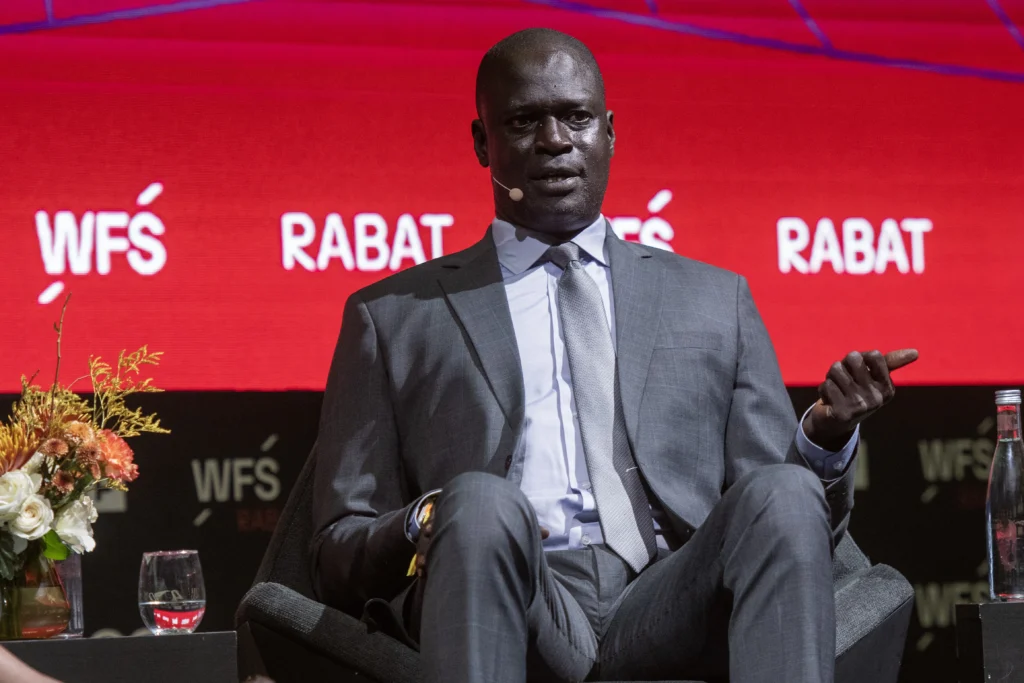
“We didn’t open the NBA office in 2010 and say ‘let’s start a professional league’,” said Amadou Gallo Fall, President of the Basketball Africa League. “We wanted to make sure we put the fundamentals in place.” What followed was nearly two decades of coaching structures, junior programmes, academies and government partnerships built before a professional competition was viable.
The NBA Academy Africa in Saly, Senegal — built within a football academy — was designed to give identified talent a clear pathway without relying on the chance encounters that had defined earlier generations. Hakeem Olajuwon was a handball goalkeeper when an American coach visited his school. “Imagine how many of those guys are constantly being missed across the continent,” Fall said. “We don’t want to leave it to chance anymore.”
Last year, a player who arrived at the Academy from Cameroon at fourteen was drafted directly into the NBA.
The Basketball Africa League launched in 2021. In four seasons it has contributed $250 million to host-city economies and catalysed 37,000 jobs. The projection for the next decade stands at $5.4 billion — a figure that reflects a compounding model: each new city adds jobs, tourist spend, media attention and corporate interest.
Infrastructure before competition
Not every African country has arenas capable of hosting professional sport. Rather than treating that as a constraint, the NBA structured public-private partnerships to build them. Rwanda put up a 10,000-seat arena. Senegal built one with 15,000 seats. Lagos has private-sector investment underway.
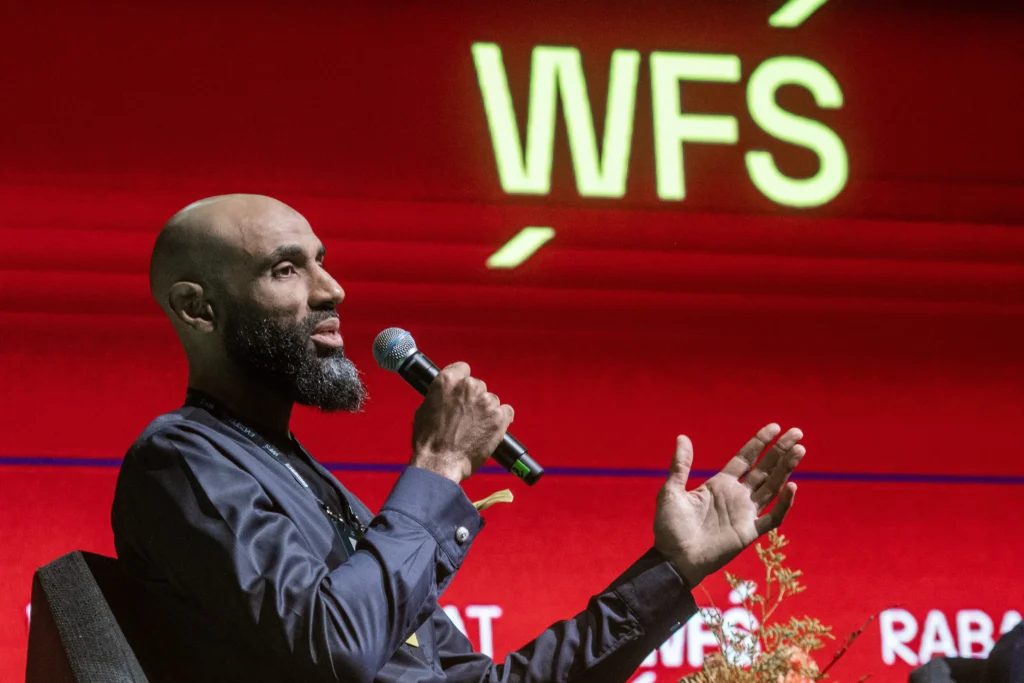
African football shares the same starting conditions — the talent, the fan base, the cultural weight — and the same structural problem. Few people are better placed to describe it than Frédéric Kanouté, the former Sevilla and Mali striker who has spent years working on football development across the continent. “We talk about academies in Africa, but let’s be honest — most of them do not meet the basic requirements,” Kanouté said at WFS Rabat 2025. “Some have no infrastructure. Some do not even have balls. Of every thousand young players who dream of becoming professionals, perhaps five will make it.”
The cost of that failure, he argued, is largely invisible. “We only talk about those who succeeded — Drogba, the great names,” said Kanouté. “Nobody talks about how many are lost along the way because the formation was not right.” The consequence is predictable: “Today, young footballers in Africa dream of leaving. Nobody can stop them — that is where they believe they can earn a living. The question is what Africa does to make them want to stay.”
The NBA spent two decades building an answer to that question in basketball. “We are the biggest exporter of talent,” said Amadou Gallo Fall. “But we decided it was time to create something right here on the continent.” For football, the blueprint now exists. The institutions willing to follow it are the piece that remains.
