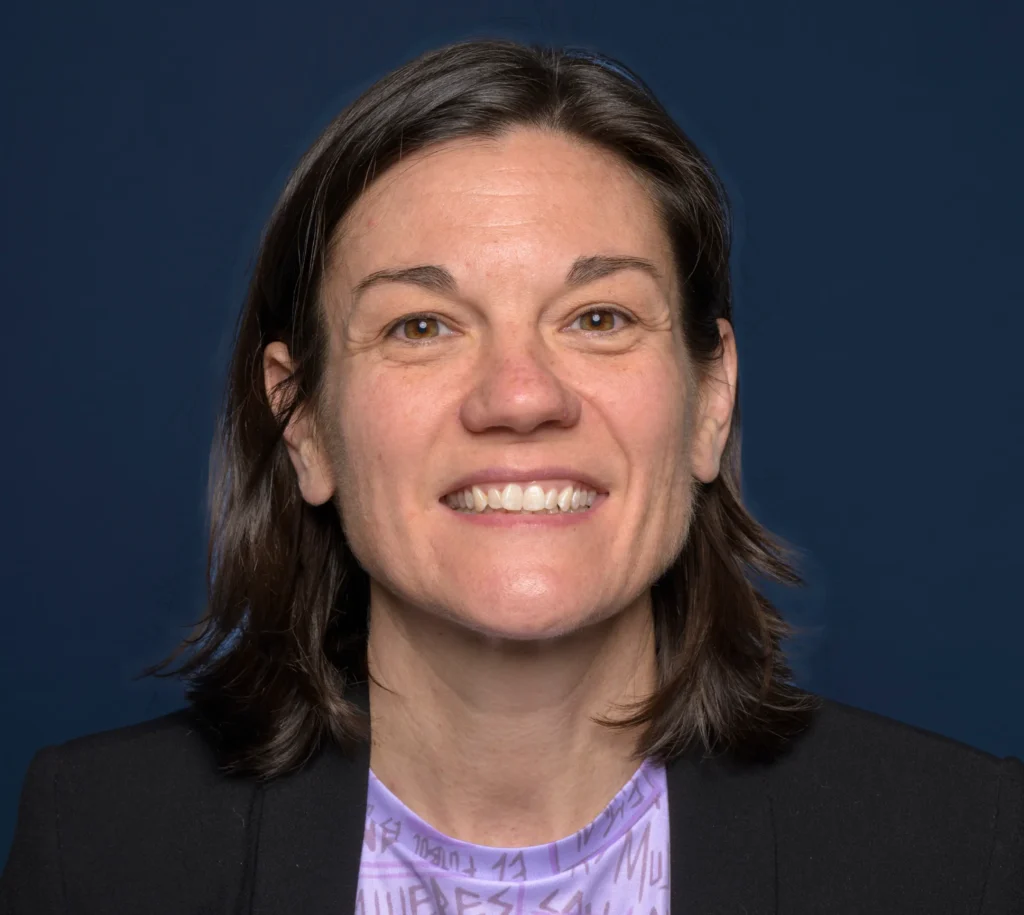
Mary Connor spent her career asking what football is really for. As a professional player, as co-founder of Soccer Without Borders, and now as recently appointed CEO of Common Goal — the largest global network using football as a tool for social change — her answer has never changed: the game is most powerful when it creates belonging.
In this edition of The Pundit’s Seat, she talks about nearly a decade of the 1% pledge, the scale of what Common Goal has quietly built, and why the launch of World Football Giving Day — days before the World Cup kicks off in North America — is the moment to reconnect the industry with what football is truly capable of.
You were a first-round draft pick in the 2003 WUSA draft, played for the Philadelphia Charge and later in the Icelandic Premier League. How did a professional footballer end up co-founding Soccer Without Borders — and what did your time as a player teach you that shaped everything that followed?
When my playing career was winding down, I went through the same identity crisis a lot of athletes experience. Your whole life has been structured around the game — your teammates, coaches, schedules, and goals. Then suddenly you’re asking: who am I now? What do I do?
What I realized then in my 20s was that what I loved most about soccer was never really playing professionally or winning championships. It was about friendship. It was about feeling welcome in a new place. It was about understanding the world better through the people I met, the places I travelled to, and the communities I experienced through the game.
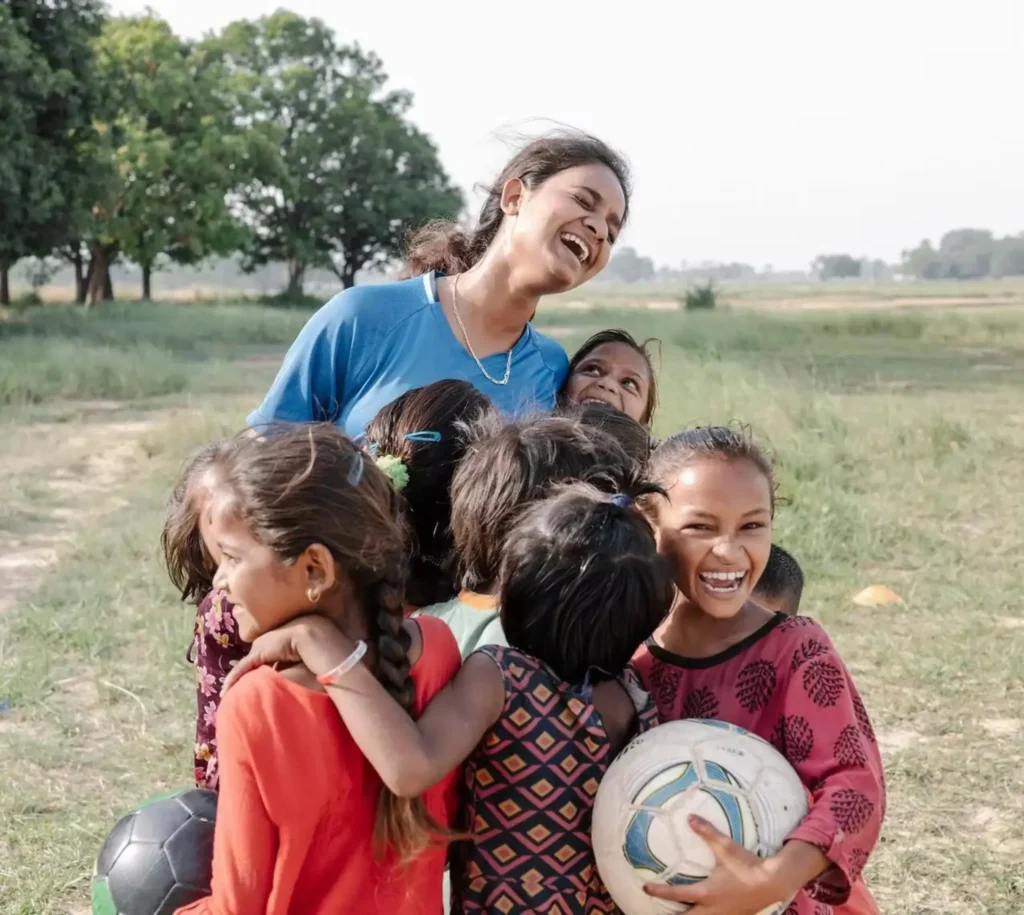
I teamed up with Soccer Without Borders founder Ben Gucciardi while studying sociology in graduate school with a focus on sport. I was asking these big questions: what is sport really for? How does it shape society and culture? But with every year of working within Soccer Without Borders and getting to meet and listen to communities from Nicaragua to Egypt to Guatemala to Uganda and beyond, those questions because much more nuanced. Who is the system designed for? Who is left out? In many ways soccer mirrors society — who is included and who is pushed to the margins.
That became my mission: how can soccer be a place where everyone, regardless of circumstance or identity, can feel a sense of belonging?
Common Goal launched the 1% pledge in 2017. Nearly a decade on, what has genuinely changed in how football organisations engage with their social responsibility?
Football generates huge revenue, mobilises people globally, and affects millions and millions of young people. What they experience through football — what they see athletes wearing, what players say publicly, what happens in stadiums — all of that affects individuals, communities and culture.
In the lead up to the launch of the pledge, there was this momentum building around athlete activism and football embracing social issues and recognizing its responsibility as an industry, not just as individual clubs doing isolated projects.
I think the 1% pledge accelerated this. It provided a platform for athletes to share what they care about beyond the game and to give back through it. It built a bridge between the industry and the football for good sector that was ready to grow, to deepen, and to be more visible. Athletes have always played an important role in social change — you can look at the history of civil rights, human rights, the Olympics — but I think the 1% pledge made it so that you didn’t have to go alone. You didn’t have to be the most famous or the one with the most resources. Everyone could do something.
And when people move together, they become greater than the sum of their parts. Instead of isolated acts of giving here and there, you start building a movement that changes expectations across the industry.
Nine years on, I think we’ve seen a real acceleration in the idea that social impact should be embedded into football, not treated as an exception. Even the language has changed. Many organizations no longer talk about ‘social responsibility’ roles — they talk about purpose, community engagement, culture.
There’s now a growing understanding that engaging communities and making the world better is not separate from football. It’s part of football.
Common Goal has built the largest global network devoted to using football as a force for social change. What is the next frontier for the platform — and what are the biggest challenges ahead?
Collectively, the Common Goal Community is now more than 200 organisations across 117 countries. Every year, those organisations directly serve around 3.6 million young people.
What people often don’t realise is that this is not work happening on the margins. If Football for Good were a football federation, serving3.6 million young people a year would actually make it the third largest football federation in the world.
So for us, the next milestone is showing that this approach to using football for youth development and community development is not a fringe idea. It’s sophisticated, it’s established, and it deserves to be invested in systematically.
The next step is supporting it at a foundational level and recognising that Football for Good is a valuable part of the football ecosystem in and of itself. Football for Good contributes something unique — both to football and to society — and that value should be recognised and supported.
Our goal is to keep growing and strengthening the network until every young person has access to a healthy football environment that helps them play, learn and thrive. And hopefully more and more people across the industry will continue to see its value and invest in it.
World Football Giving Day launches on May 26, weeks before the World Cup. What is it, how does it work, and why does football need its own giving day?
World Football Giving Day is a new moment — and hopefully a new tradition — for everyone who loves the game to give back through football.
It’s about supporting the places where the real heartbeat of football lives: the Football for Good ecosystem, the communities using the game to change lives every day. Football exists everywhere in the world, but the heart of the game is in those communities that use football to create belonging, opportunity and hope.
Football needs its own giving day because right now the world needs belonging, opportunity, and hope more than ever. And football could deliver it, if it would lead with its heart.
If we can reconnect people to that — reconnect them to what football is truly capable of beyond entertainment — then not only can we drive investment into communities where it’s needed most, we can also remind the entire industry of the power football has beyond itself.