
This article is a summary of Chapter 6, Competition Formats & Alternative Models, of Football 2016–2026: The Decade that Rewrote the Rules, a report produced by World Football Summit documenting how the global football industry has changed over the past decade. A new chapter will be published each week. Download the full chapter free of charge HERE.
In 2016, football’s biggest competitions had barely changed in decades. The Champions League group stage had run with 32 clubs since 1999. The World Cup had run with 32 teams since 1998. The Club World Cup was a seven-team midseason fixture nobody outside football’s specialist press paid much attention to. When these competitions did change, it was for narrow reasons: a qualifying place adjusted here, a kick-off slot moved there. Nobody was redesigning a competition to build an entertainment product around it.
Chapter 6 of Football 2016–2026: The Decade that Rewrote the Rules traces how, over the following ten years, that changed everywhere at once: in Europe’s oldest competitions, in Super Cups exported thousands of miles from where they’ve always been played, in a women’s game building its own version of everything, and in a league that didn’t exist five years ago.
A new tier, not a bigger one
UEFA launched an entirely new competition in 2021, the Conference League, giving clubs from smaller leagues and countries a genuine European campaign, and the broadcast and prize money that comes with it, for the first time. Three years later, UEFA expanded the Champions League’s own format: a club reaching the 2024-25 final now plays four more matches than before, extra broadcast inventory generating extra revenue for the clubs already in it, European Leagues’ Alberto Colombo noted.
A bigger door for clubs outside Europe
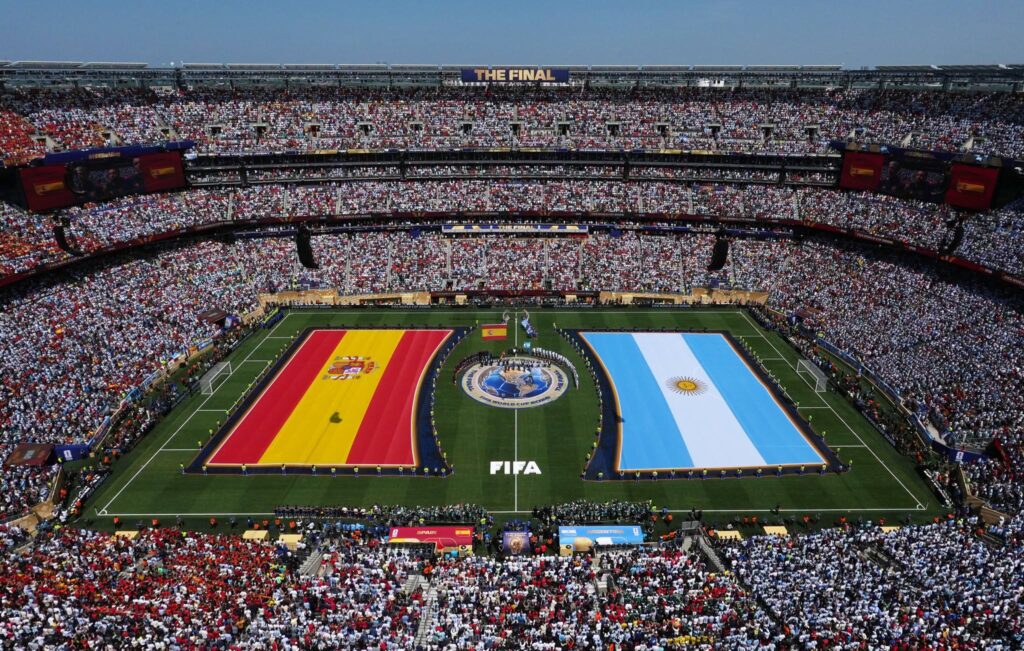
FIFA rebuilt its Club World Cup from a seven-team afterthought into a 24-club tournament run every four years, giving clubs from outside Europe’s traditional elite, a route to global visibility and sponsor attention they couldn’t buy any other way. The new format was built to break a revenue concentration: “the top 30 clubs in Europe generate a combined revenue equal to the rest of the world’s clubs together,” Ornella Desiree Bellia said at WFS Asia 2023.
Playing away from home
Because a Super Cup sits outside the league calendar, moving it doesn’t touch any team’s competitive position the way relocating an actual league fixture would. That’s exactly why Spain’s Supercopa and Italy’s Supercoppa could move to Saudi Arabia, in return for hosting fees and access to a market both federations wanted to reach. LALIGA tried to go further, and put an actual league fixture, Villarreal against Barcelona, up for relocation to Miami. It hasn’t happened: moving a league match changes the competitive terms for every other club in the division, which is exactly the problem a Super Cup doesn’t have.
Growing a different way
Women’s football took a different route to more value: building its own competitions rather than expanding inside the men’s game’s structures. UEFA’s Women’s Champions League was redesigned and produced three different winners over four seasons, the average winning margin down 15 per cent. A first Women’s Club World Cup launches in 2028; the Women’s World Cup expands to 48 teams in 2031. Unlike the men’s side, where the same clubs keep winning as competitions grow, growth here has so far produced more winners, not fewer.
Starting with a blank slate
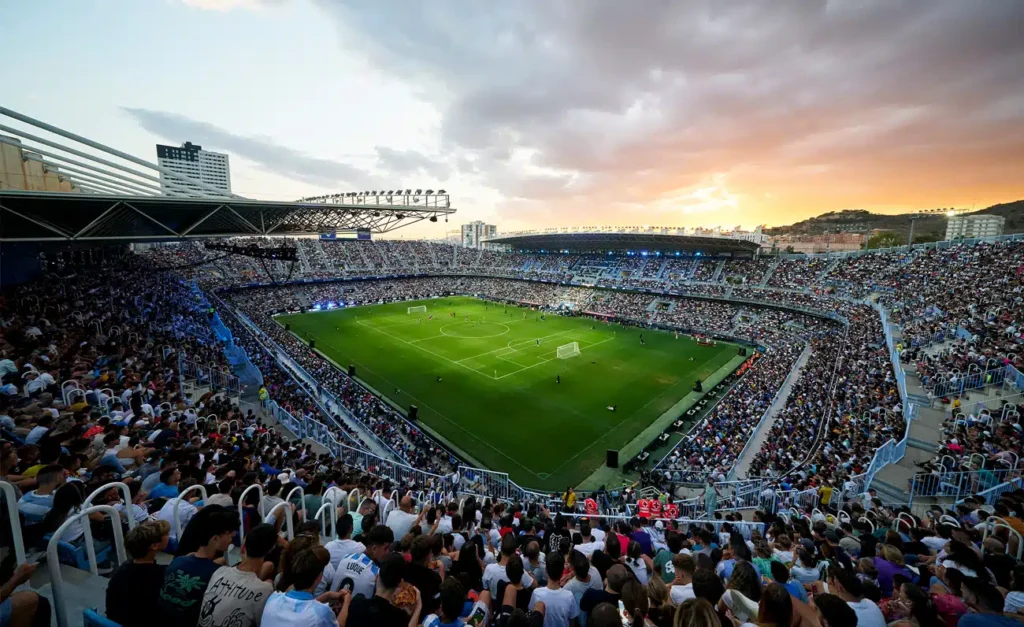
The Kings League, founded by Gerard Piqué, reinvented the product itself: streamers running their own teams, rules that change weekly, a storyline built around owners as much as players. Its finals in Málaga sold 30,000 tickets in ninety minutes. The Baller League followed a similar model soon after. Not everyone is convinced the audience is new rather than borrowed: “I have high reservations that entertainment over competition will win in the very long run,” the Esports World Cup Foundation’s Ralf Reichert said at WFS Asia 2023.
That logic reached its biggest test yet in 2026. The men’s World Cup expanded to 48 teams and drew a record 6.8 million spectators, according to FIFA, the largest edition it has ever organised. Leagues want more matches to generate more revenue, Virtus Sports Group’s Gustavo Silikovich pointed out, but players don’t want to play them, and fans are, in places, watching less football rather than more, simply because there’s so much of it on offer. Ten years on, the competitive shape of football bears little resemblance to 2016.
This is a summary of Chapter 6, Competition Formats & Alternative Models, of Football 2016–2026: The Decade that Rewrote the Rules. Download the full chapter free of charge HERE.