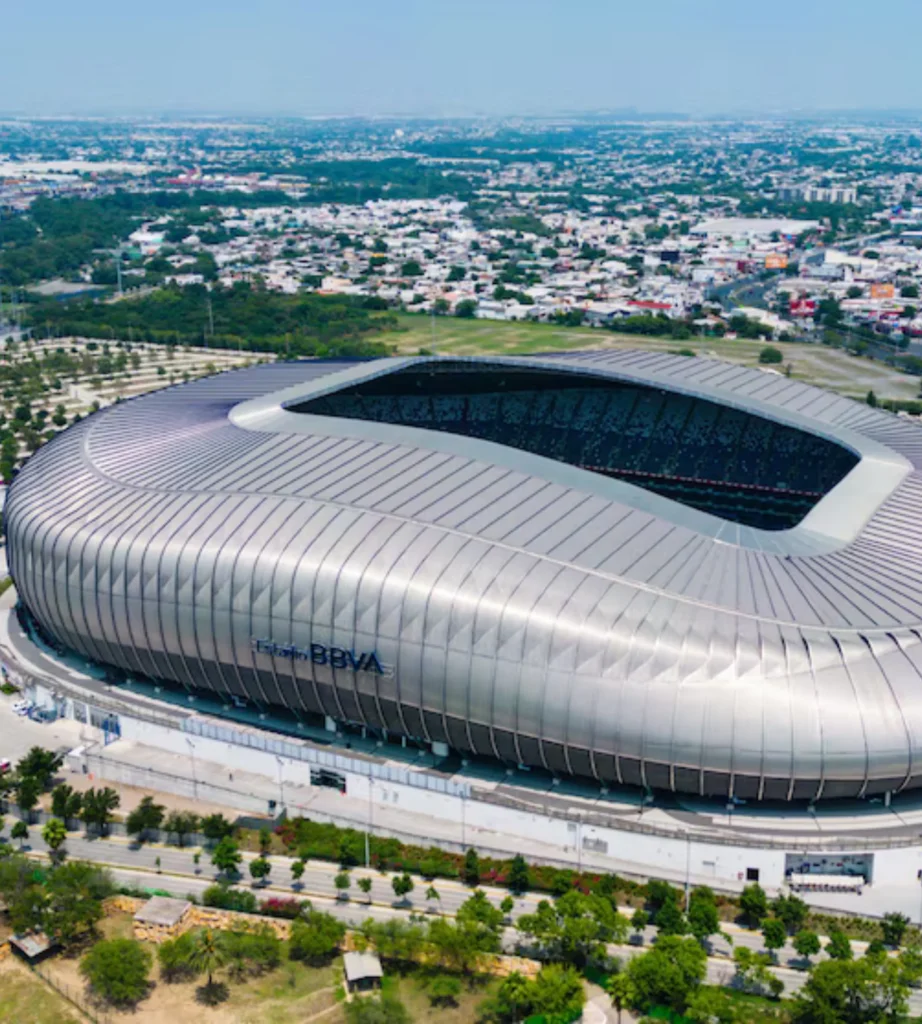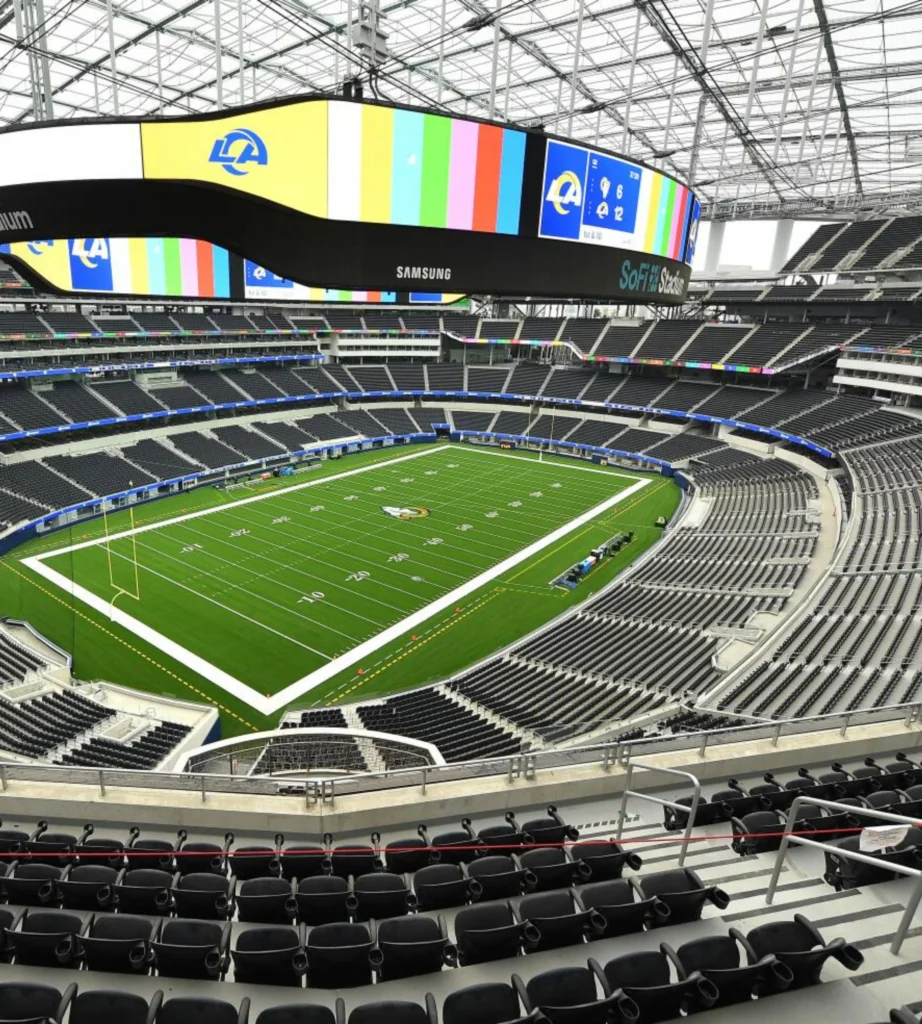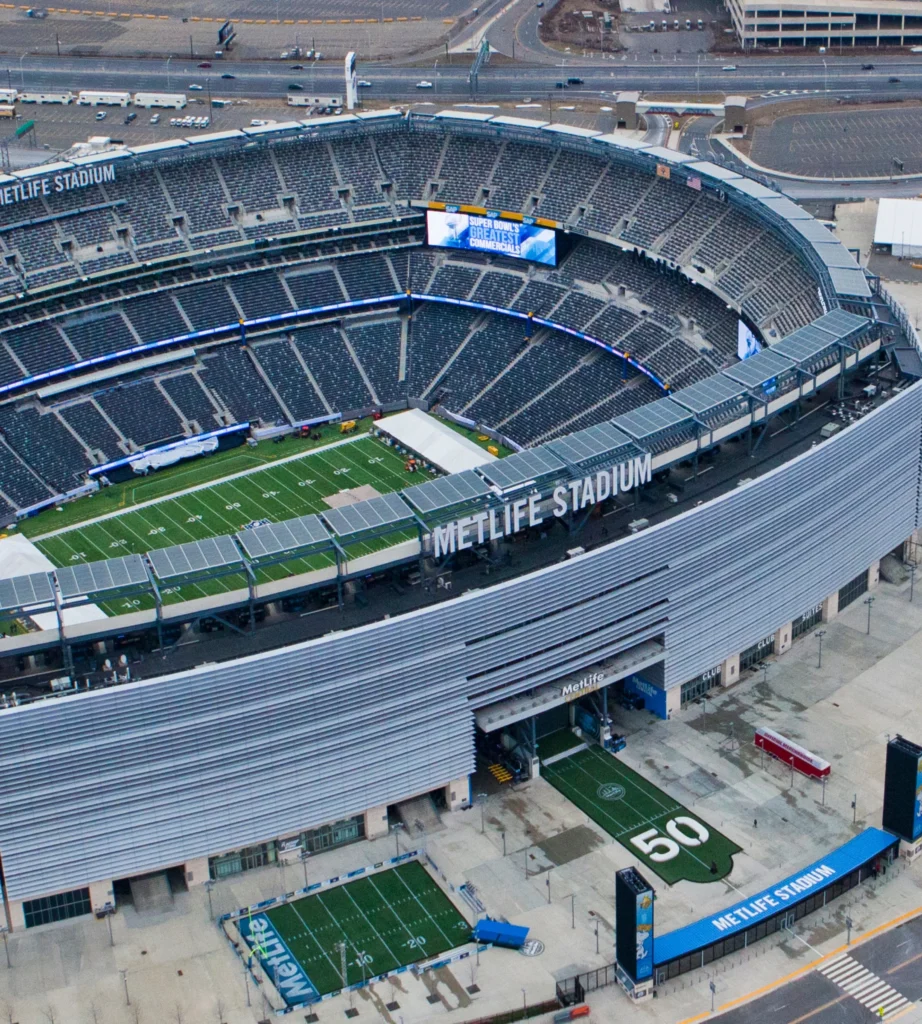
In our latest blog piece we look into what the 16 World Cup stadiums say about the future of football infrastructure
The FIFA World Cup kicks off in Mexico City on 11 June. Across the following 39 days, 104 matches will be played across 16 venues in three countries. Not one of those venues was built for this tournament. The most recently constructed stadium in the rotation is SoFi Stadium in Los Angeles, completed in 2020 — for the NFL. In the United States, eleven American football stadiums will be fitted with temporary overlays to meet FIFA requirements and then returned to their regular use when the tournament ends. In Mexico, three existing football stadiums have been renovated. In Canada, two existing multi-purpose venues. Zero new permanent infrastructure.
Compared to Qatar 2022, where an entire portfolio of stadiums was built from scratch in a desert, this represents a fundamental shift in how the world’s most powerful football governing body thinks about hosting its flagship event. The architects behind it argue that shift has been a long time coming.
The cost nobody talks about
Jeff Keys, Global Events Practice Leader at Populous — the firm that worked on five of the sixteen 2026 venues — put it plainly at WFS Mexico City 2025.
“Everybody likes to get focused on the upfront capital cost,” he said. “But if you think about the portion of the iceberg that sits above the water line versus below the water line — quite often what’s above is your front-end capital cost. What’s below is your lifecycle cost for the next 30 to 50 years. The debt, the salaries, the maintenance, the utilities.”
The argument is straightforward: a stadium built to World Cup specification for a tournament that lasts six weeks will spend the remaining decades of its life carrying costs designed for an event it will never host again. The Maracanã, rebuilt for 2014, reported operating losses running to millions annually within years of the tournament. The infrastructure left behind by Athens 2004 became one of the most cited cautionary tales in sports governance.
The solution Keys advocates is what he calls right-sizing.
“If a World Cup says you have to have 45,000 seats but you only need 30,000 for legacy, you should probably think about a design that’s 30,000 seats that can increase temporarily. Because if you overbuild, all you’re going to do is increase those lifecycle costs.”
The 2026 World Cup, played in existing venues with temporary capacity additions, is the most visible application of that principle in the tournament’s history.

What you don’t leave behind
The shift in 2026 reflects a broader trend that has accelerated significantly over the past decade. London 2012 used temporary infrastructure equivalent to the three previous Olympics combined. Paris 2024 built one new permanent venue. LA28 will build zero. “Sometimes the legacy is what you don’t leave behind,” Keys said at WFS Mexico City.
His colleague Partho Dutta, who leads Populous’s Latin American stadium practice, drew the contrast with Qatar explicitly.
“If you trace the history of the World Cup from Germany to South Africa, Brazil, and now to today, you will see how FIFA’s direction has evolved. It is more and more sustainable. For this World Cup there are no new venues being built. Look at how different that is from Qatar.”

What it means for the industry
For the football business, the implications extend well beyond tournament planning. The same logic that applies to World Cup infrastructure applies to club and league venue strategy. The stadiums that are generating the most sustainable returns today are not necessarily the largest or the newest — they are the ones whose capacity was calibrated to what the market actually supports, and whose surrounding development generates revenue on the 300 days a year when no match is being played.
The 2026 World Cup did not invent that principle. But by applying it at the largest scale in football history, it has made it very difficult to argue against.