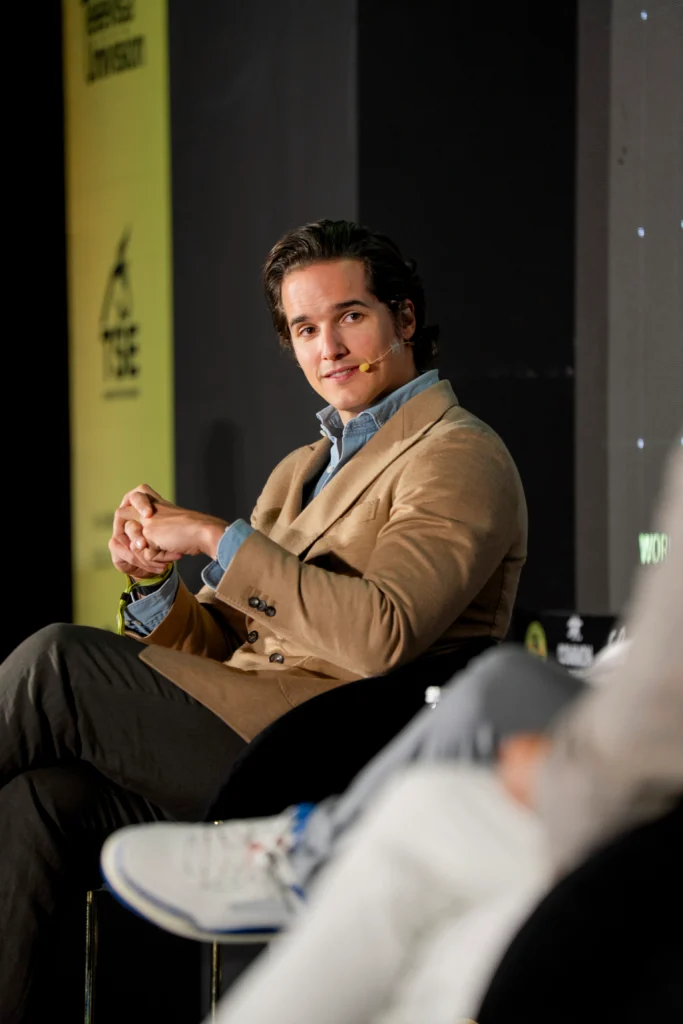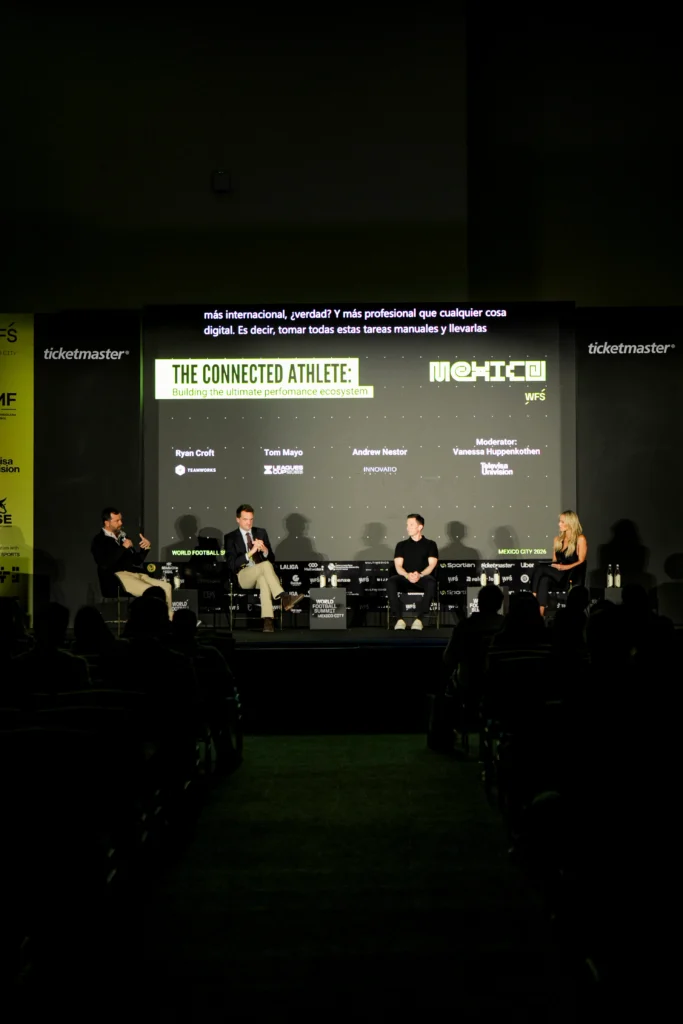
World Football Summit Mexico City 2026 kicked off yesterday at Camino Real Polanco — seven days before the host city inaugurates the biggest World Cup in history. Senior leaders from FIFA, the FMF, LALIGA, Club América, Tigres, Atlas FC, Ticketmaster and Miami Heat were among those on stage for a day of sessions covering fan data and monetisation, stadium infrastructure, rights strategy, club management and the commercial development of women’s football.
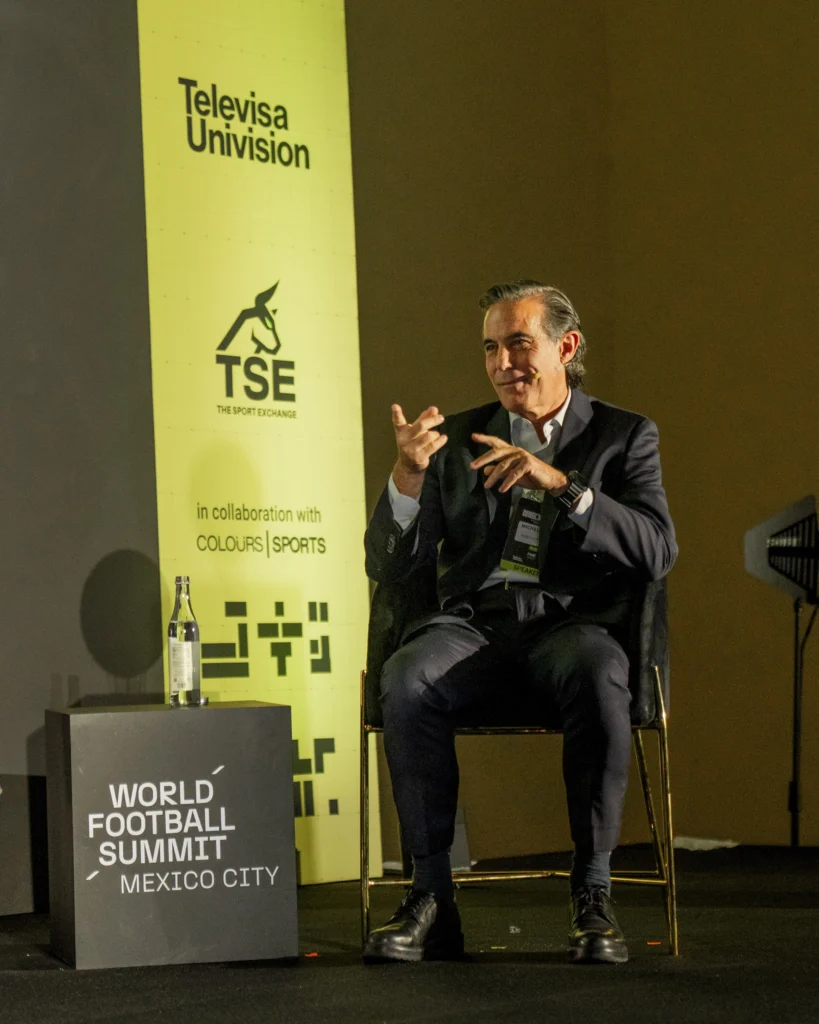
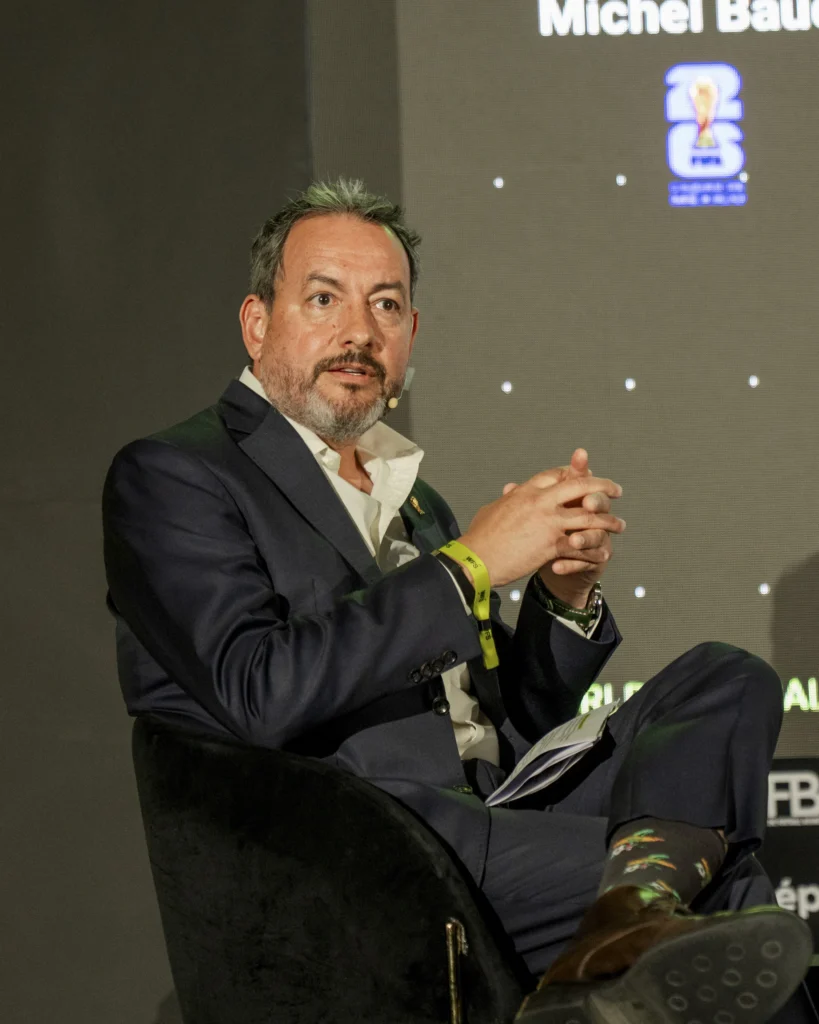
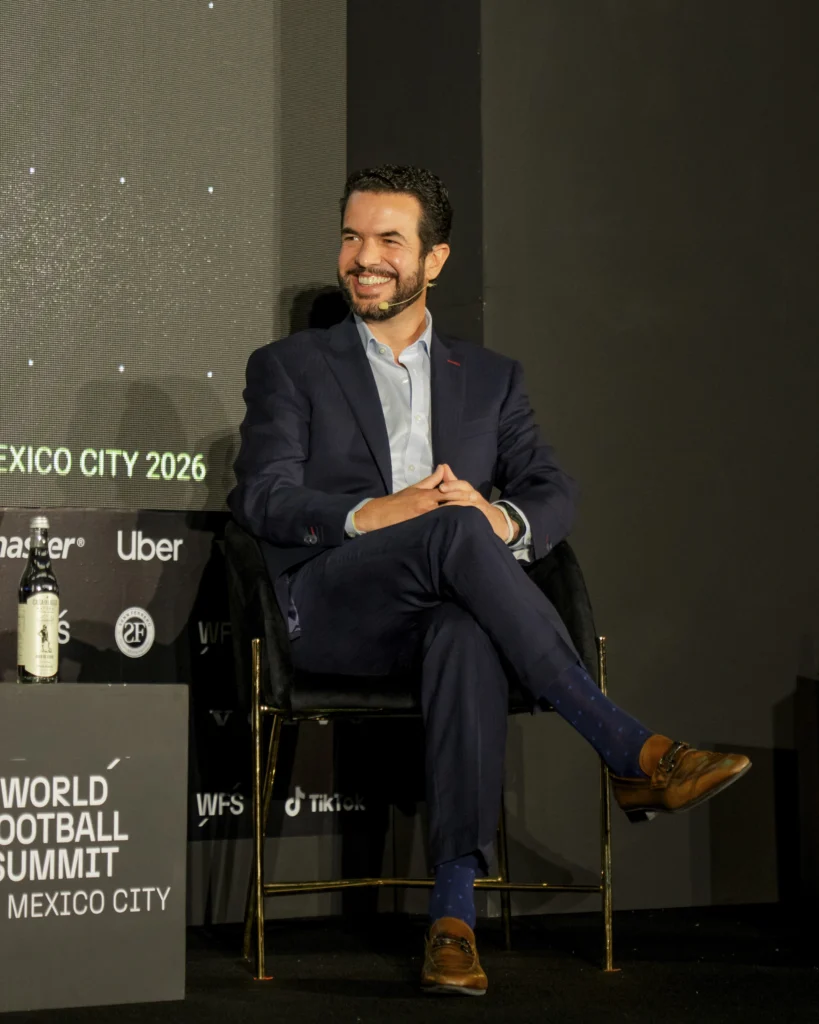
The 2026 World Cup, projected to generate $3 billion in economic impact for Mexico and reach a global broadcast audience of 6 billion viewers, ran through much of the day’s conversation, with FIFA Mexico COO Jurgen Mainka, FMF Secretary General, Íñigo Riestra, Televisa Univision Global President of Sports, Olek Loewenstein and Host City representative Michel Bauer setting the scale in the opening session.
But the tournament is only the most visible expression of a broader moment for Mexican football. The day’s sessions also examined how clubs are turning fan data into revenue, how stadiums are being built into commercial platforms, how leagues protect and monetise their rights, and how women’s football is establishing itself as a business on its own terms.
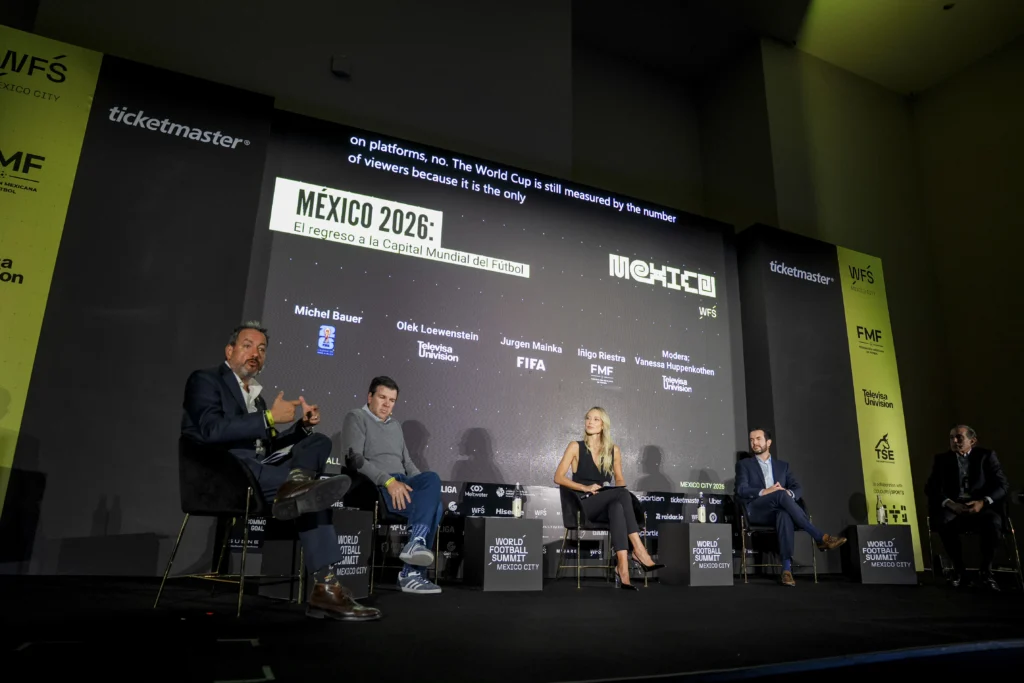
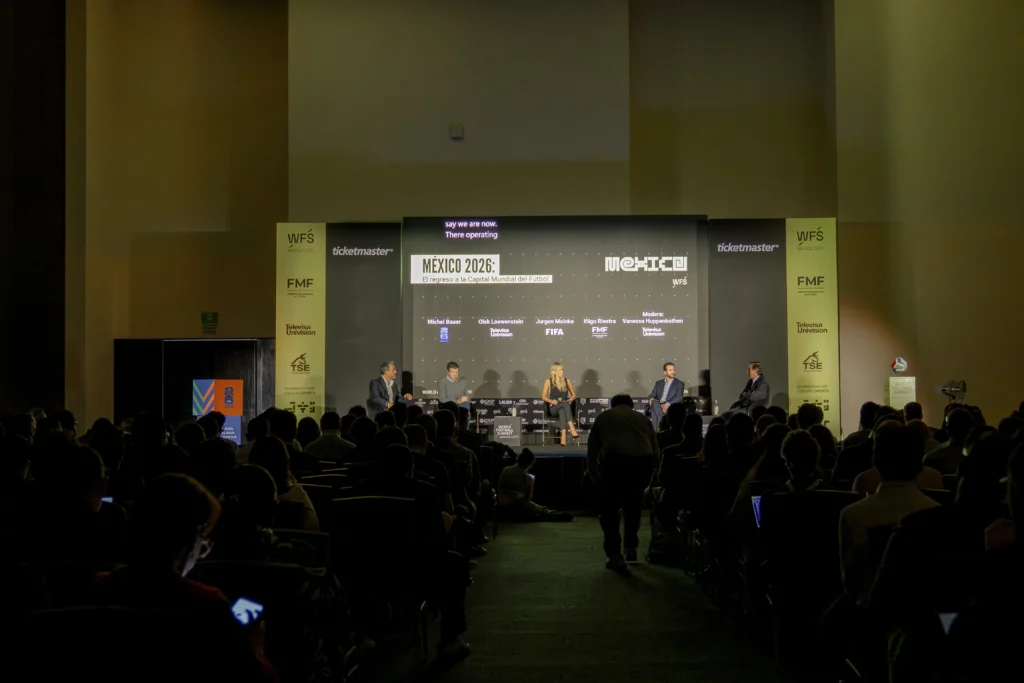
Mexico 2026: The World Cup Returns to the Global Capital of Football
Speakers
- Michel Bauer, Host City Mexico City
- Olek Loewenstein, Global President of Sports, Televisa Univision
- Jurgen Mainka, Chied Tournament Officer, FIFA
- Íñigo Riestra, Secretary General of the Mexican Football Federation (FMF).
Key takeaways:
- A ‘Team Mexico’ structure of 600 professionals has been assembled across the organising effort.
- The tournament will leave a lasting operational legacy across customs, airports, border control, security and transport.
- Projected economic impact stands at $3 billion, with a global broadcast audience of 6 billion viewers.
- The event will serve as the professional foundation for Mexico’s bid to host the 2031 Women’s World Cup.
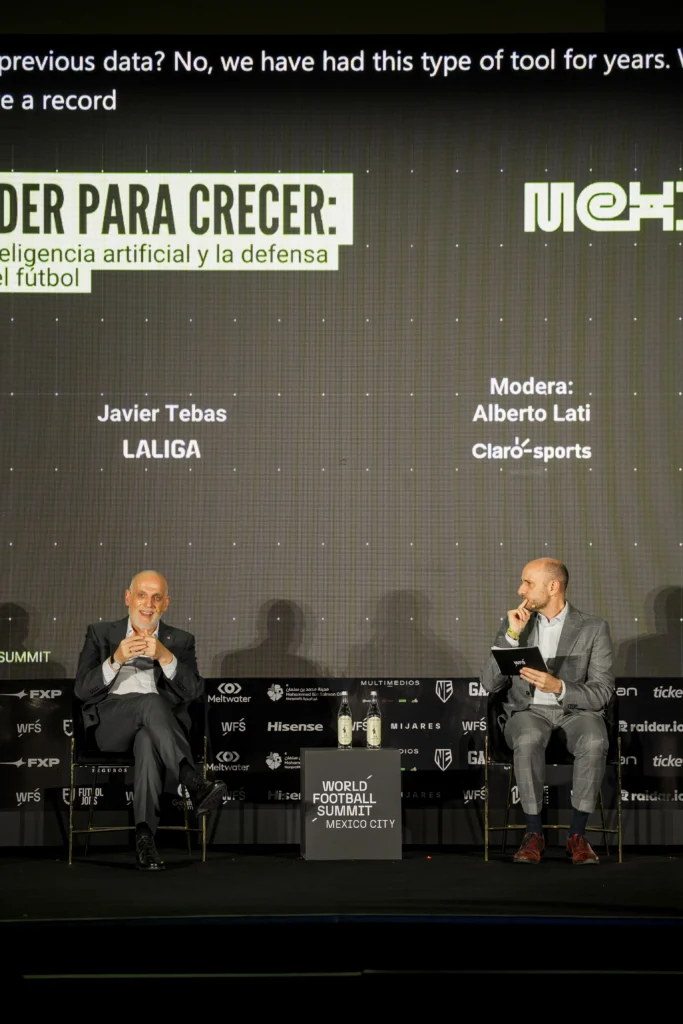
Understanding Growth: LATAM, AI and Protecting the Value of Football (LaLiga)
Speaker:
- Javier Tebas – President, LaLiga
Sustainable growth in Latin American football requires building leagues with independent commercial value, financial discipline and robust rights protection.
Key takeaways:
- LALIGA tripled its revenues — surpassing €2 billion — following the centralisation of its audiovisual rights in 2015.
- Financial control mechanisms successfully resolved the structural debt accumulated across Spanish football.
- Dynamic anti-piracy blocking reduced illegal consumption by 60%.
- Artificial intelligence is now a core driver for optimising operations, sports medicine and broadcast delivery.

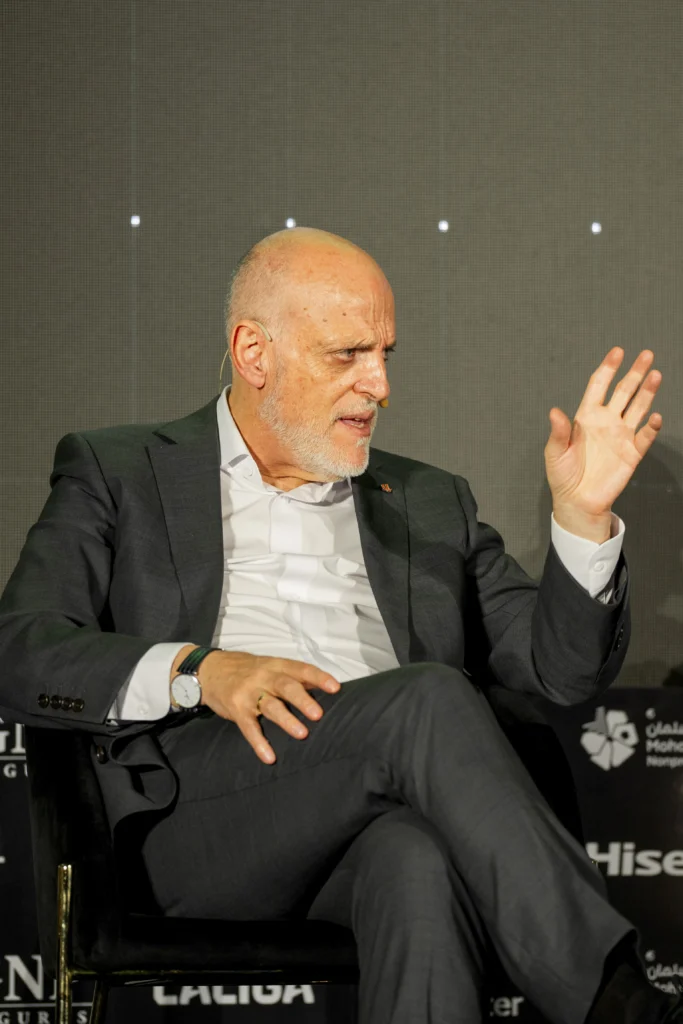
Connected by the Game: Data, Technology and the Fan Experience (Ticketmaster)
Speakers:
- Alejandro Ordaz – Deputy Director of Marketing and Revenue Management, Ticketmaster Mexico
- Regina Dávalos – Commercial Director, Ticketmaster Mexico
- Everardo Valdez – Director of Institutional Relations and Media, CF Monterrey Rayados
- Matthew Jafarian – EVP Business Strategy, Miami Heat.
The session focused on anticipating and enhancing the fan’s purchase journey through immersive digital tools.
Key takeaways:
- The Virtual Venue tool was unveiled for Estadio BBVA, making it the first venue in Latin America to offer 360° virtual walkthroughs allowing fans to preview their seats before buying.
- The initiative follows the successful migration of more than 40,000 Rayados season-ticket holders to digital ticketing.
- The core principle: the matchday experience begins long before kick-off, and purchase clarity drives conversion.


Attendance, Loyalty and Engagement: Untangling the Confusion (FXP)
Speakers:
- Santiago Montes Escobar – Strategic Planning and Commercial Innovation Lead, CD Guadalajara
- Edgar Martínez – VP of Content, FMF
- Rubén Cuevas – CMO, Deportivo Toluca FC
- Enrique Arrambides – Commercial Leader Mexico, Nielsen Sports.
Clubs are no longer competing simply to fill seats — they are competing to understand who their fans are, what they consume and how they engage beyond matchday.
Key takeaways:
- Toluca presented a compelling commercial turnaround: from low attendances in 2021 to sold-out season-ticket inventory and a waitlist of over 20,000.
- Chivas highlighted the use of digital assets to underpin data-driven commercial decision-making.
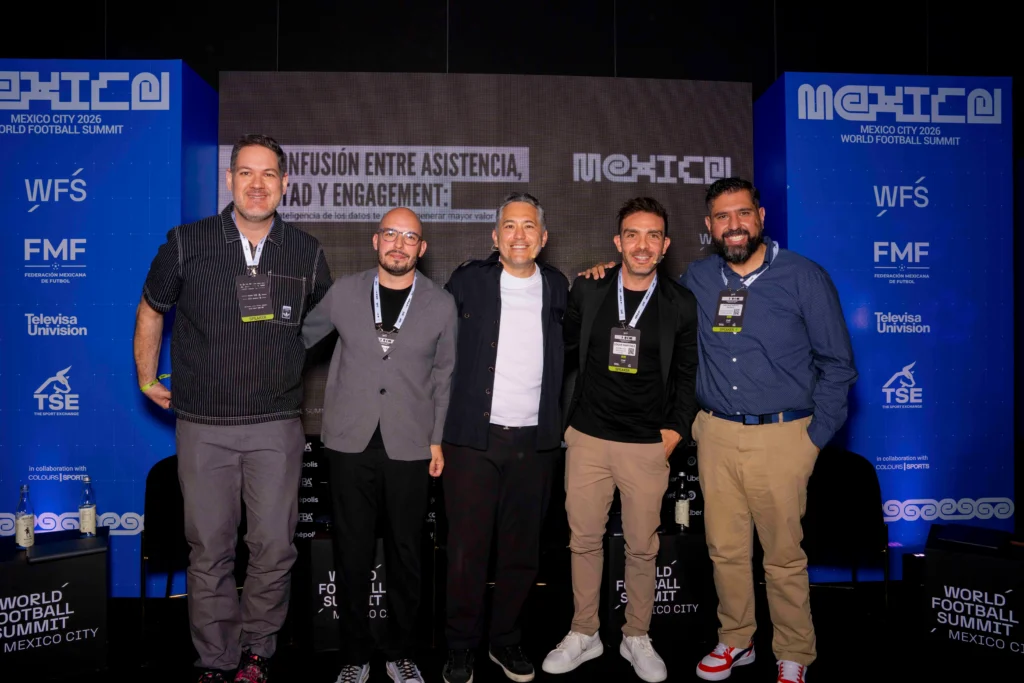
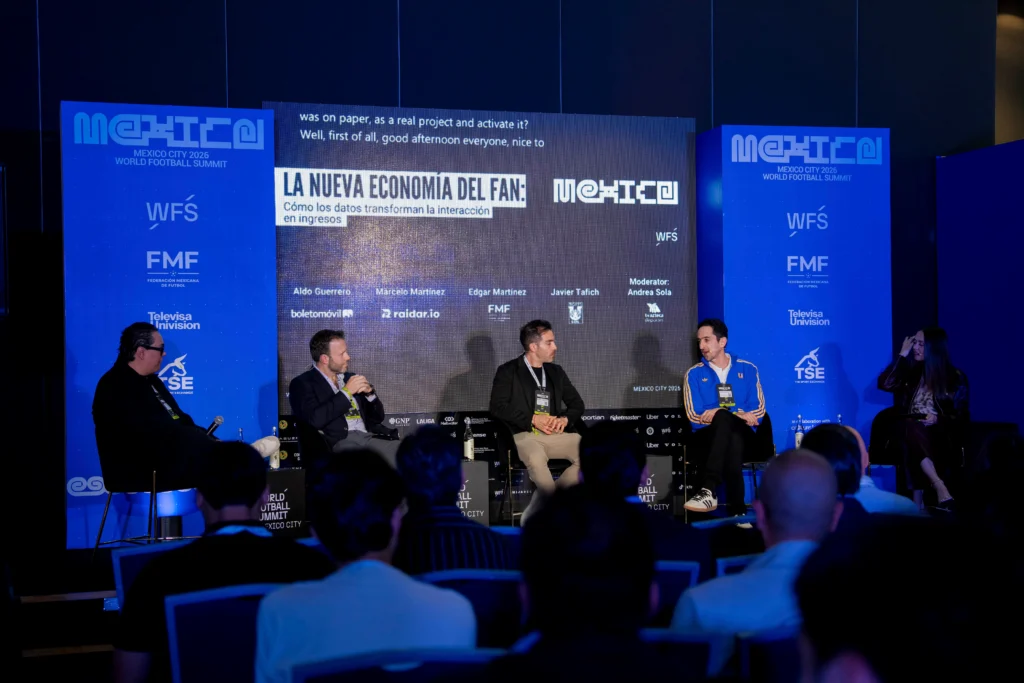
The New Fan Economy: How Data Converts Engagement into Revenue
Speakers:
- Javier Tafich – Commercial Director, Tigres
- Aldo Guerrero – VP Business, Boletomóvil
- Marcelo Martínez – Founder & CEO, Raidar.io
- Edgar Martínez – VP of Content, FMF
Monetising modern football depends on full-funnel fan identification — inside and outside the stadium.
Key takeaways:
- Tigres illustrated the scale of the challenge: an estimated fanbase of 10 million, with 40,000 matchday attendees — of whom 25,000 remain unidentified in their systems.
- A highly engaged superfan can generate up to 20 times the lifetime value of a casual supporter.
- Planned initiatives include cashless payment systems, secondary ticketing market tracking and AI-powered behavioural prediction tools.
The Stadium as a Platform: Fans, Data and Revenue in the Connected Venue (Sportian)
Speakers:
- Jorge Balandra – Fan Relations Director, Club América
- Ramón González, North America Business Manager, Sportian by Globant
- Leonardo Gurria, CTO/CIO, Grupo Ollamani
- Tiago Hendges, CTO, Grêmio Foot-Ball Porto Alegrense.
The stadium of the future must function as a unified digital ecosystem — one where technology operates as invisible infrastructure.
Key takeaways:
- The fan experience no longer begins at the turnstile; it starts at trip planning.
- Robust connectivity — antennas, audio systems, CRM integration — enables personalisation at the level expected in banking or retail.
- Sponsors are shifting towards a publisher model, demanding real ROI metrics grounded in segmented fan data.
The Connected Athlete: Building the Ultimate Performance Ecosystem
Speakers:
- Ryan Croft – Director of Latin America, Teamworks
- Tom Mayo – Executive Director, Leagues Cup
- Andrew Nestor – Partner, Innovatio Capital.
Club growth is increasingly dependent on the digitalisation and centralisation of internal operations.
Key takeaways:
- Professional sport is entering a phase where clubs require cleaner systems, centralised information and departments operating under a shared strategic vision.
- The urgent priority is centralising data — medical, financial, commercial and sporting — so that institutional knowledge is not held in silos or dependent on individuals.
- Breaking down departmental barriers unlocks data that can simultaneously support athlete performance and welfare, and optimise contracts and travel logistics.
ROI in Elite Sports: Integrating Data, Infrastructure and Capital
Speakers:
- Aníbal Fajer Alonso – President, Atlas FC
- Kike Levy – CEO, Gameday by NJF Holdings
- Marc Spiegel – Managing Member, Innovatio Capital.
Return on investment in elite sport must be insulated from on-pitch results through sound institutional structure.
Key takeaways:
- A club should be managed as an investment, content and community platform simultaneously.
- Institutional culture, transparency and leadership function as competitive infrastructure — reducing volatility and protecting long-term value.
Scaling the Game: Lessons and Strategies for Growing Women’s Football Globally
Speakers
- Claudia Carrión – Corporate Director, Club América Femenil
- Stefano Petruzzo – CEO, Olympique de Marseille Feminines
Women’s football must stop being treated as an extension of the men’s game and establish its own brand identity and commercial operation.
Key takeaways:
- Club América Femenil demonstrated its scale with hard numbers: 26,000 fans at a final, 6.8 million TV viewers and status as the first Mexican club to compete in a Women’s Club World Cup.
- The challenge has shifted: proving that women’s football commands an audience is no longer the issue. The work now is building the commercial infrastructure — dedicated facilities, standalone sponsorship deals and independent revenue strategies — to sustain it as a business.