
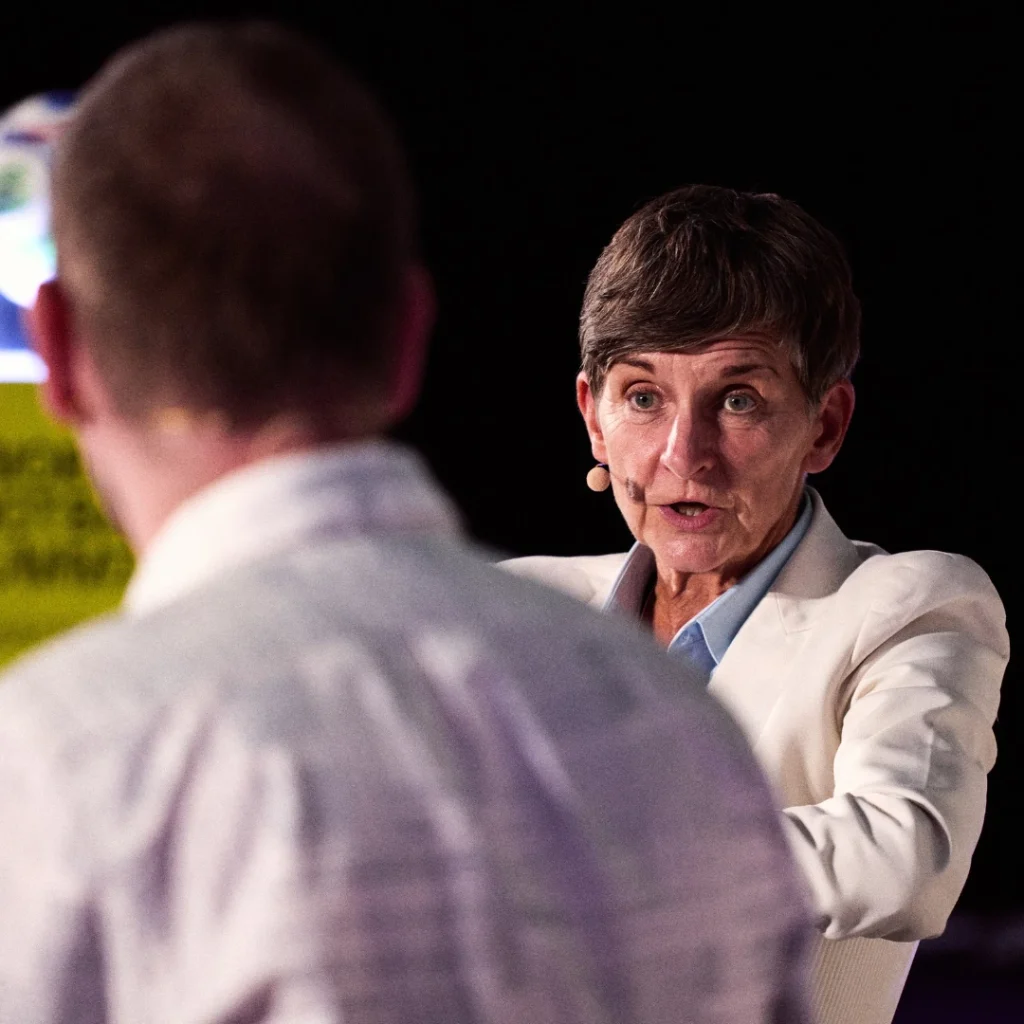
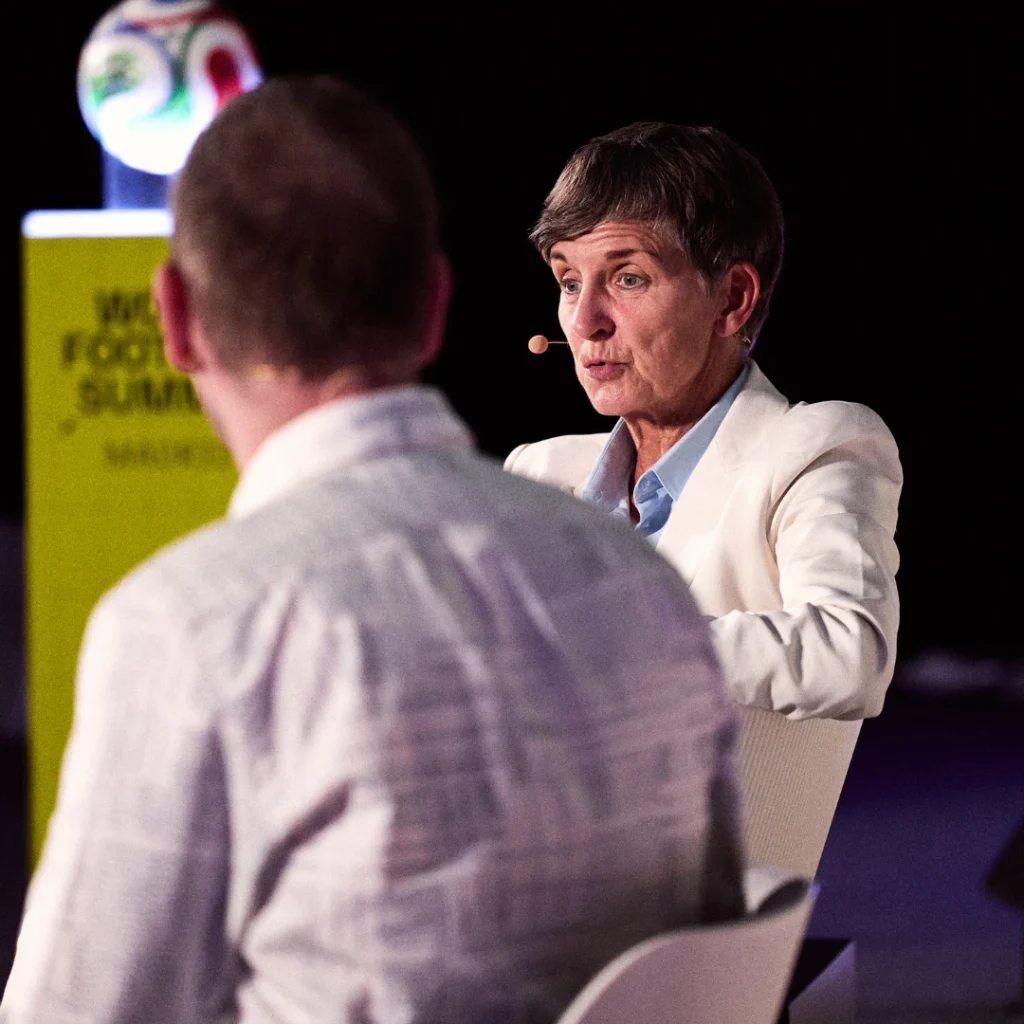
Laura McAllister, Vice-President of UEFA, views FIFA Forward Enterprise (FFE) as a direct challenge to football’s sporting model. Speaking at WFS Madrid 2026 alongside journalist Ben Jacobs, she warned that introducing private equity into commercial operations posed “a genuine existential threat to the game.”
Her opposition stems from her perspective as a Cardiff City season-ticket holder rather than an executive administrator: “First and foremost I’m not even a player, I’m a fan. I could scarcely imagine how that would transform the game into a monstrous entity that would not serve the fans, the players, the leagues, the clubs, even the broadcasters and commercial interests.”
A candidate before 18 November
McAllister is calling for a change in FIFA’s leadership, arguing that confidence in President Gianni Infantino has broken down well beyond the dispute over FFE. She points to executive decisions enacted without democratic oversight, including the overturning of Folarin Balogun’s World Cup red card following a telephone conversation with Donald Trump, and the unilateral award of the FIFA Peace Prize.
With the candidacy window closing on 18 November ahead of the March election, she argues that replacing the individual at the top is insufficient on its own. In her view, dissatisfaction across federations reflects a wider demand: “we needed to change not only the leadership, but the culture and the governance that creates that leadership.”
For McAllister, uniting federations behind a credible challenger requires establishing a shared reform platform before focusing on personalities. She argues that any candidate must stand on “a manifesto of agreed reform, of greater transparency, of greater accountability, of less political interference, of recognising that the role of the FIFA president should be to run football, not to involve himself in other ventures, whether that’s private sector or political.”
On the prospects for reform under the current presidency, she sees little room for optimism: “I think the chances of reforming FIFA with the same leadership are next to pretty much non-existent now.”

From player to the boardroom
McAllister’s transition into administration followed a playing career as captain of Wales, where female athletes had to campaign directly for basic investment and European Championship entry. Retiring at 32 to complete a doctorate in political science and become a university professor, she chose governance over coaching as the most effective route to apply her skills.
Elected to the UEFA Executive Committee in 2023 as its sole female member before her appointment as Vice-President, her focus remains on building institutional access for others. “It’s always been a really important concept for me, not only to get through the door, but to keep the door open for other women to make sure they join us in the boardroom,” she said.
She currently chairs UEFA’s Gender Equality Working Group and is developing a mentoring programme for retiring female players. Observing that athletes entering administrative spaces are often “thrown in cold, if they’re thrown in at all”, the initiative provides structured support to build governance competencies before taking on board roles.
Diversity as a decision-making problem
McAllister resists treating diversity as a metric of headcount. “Sitting around the table is of no consequence to anybody — it’s about having a meaningful agency around your contribution,” she said.
She extends that argument beyond gender to include people of colour, individuals with disabilities, and the core stakeholders of the sport. Describing players, clubs, and supporters as “the real lifeblood and the owners of the game,” she argued that diverse boardrooms matter because they bring varied lived experiences that eliminate administrative blind spots.
Football is capable of regulating itself
Despite her critique of the sport’s current administrative model, McAllister maintains that football should remain capable of self-regulation.
However, she stresses that preserving autonomy requires discarding the myth of sporting exceptionalism. Governing institutions must enforce standard corporate controls around compliance, financial propriety, and transparency rather than expecting special treatment. “We talk about ourselves as being somehow exceptional, and we’re not,” she said.
From this perspective, state intervention—such as England’s independent football regulator—represents an admission of administrative failure rather than a model to emulate. “The independent regulator came from a conviction in government that football wasn’t regulating itself effectively, and when you get to that point, you’ve already failed as a governance organisation,” she explained. In her argument, external regulation simply exposes an institutional unwillingness to enforce proper discipline from within.