
Personalisation in football is no longer a new concept. Different fans consume the game in different ways, across multiple devices, formats and moments. The industry has broadly accepted that reality.
What remains far less common is seeing how a league translates that understanding into live, scalable products that operate at the core of the competition rather than at the edges.
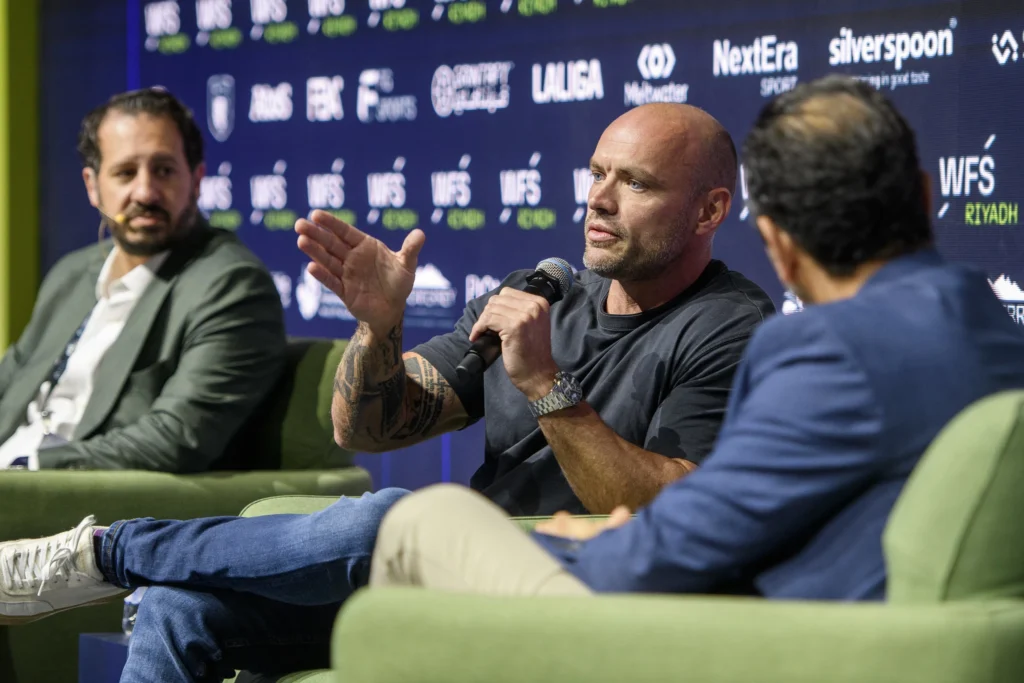
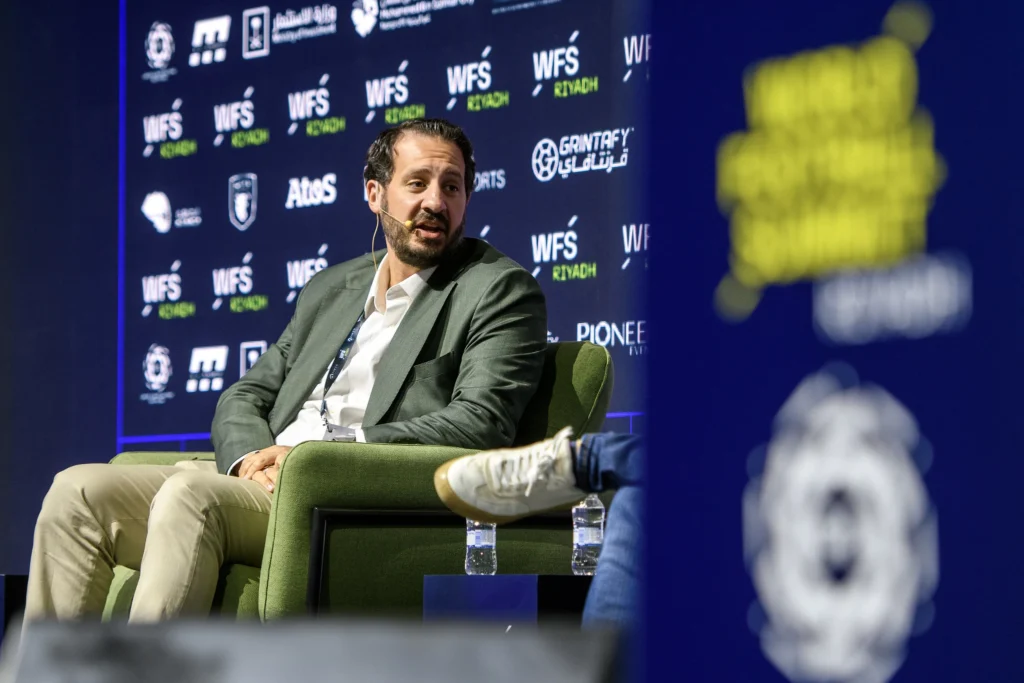
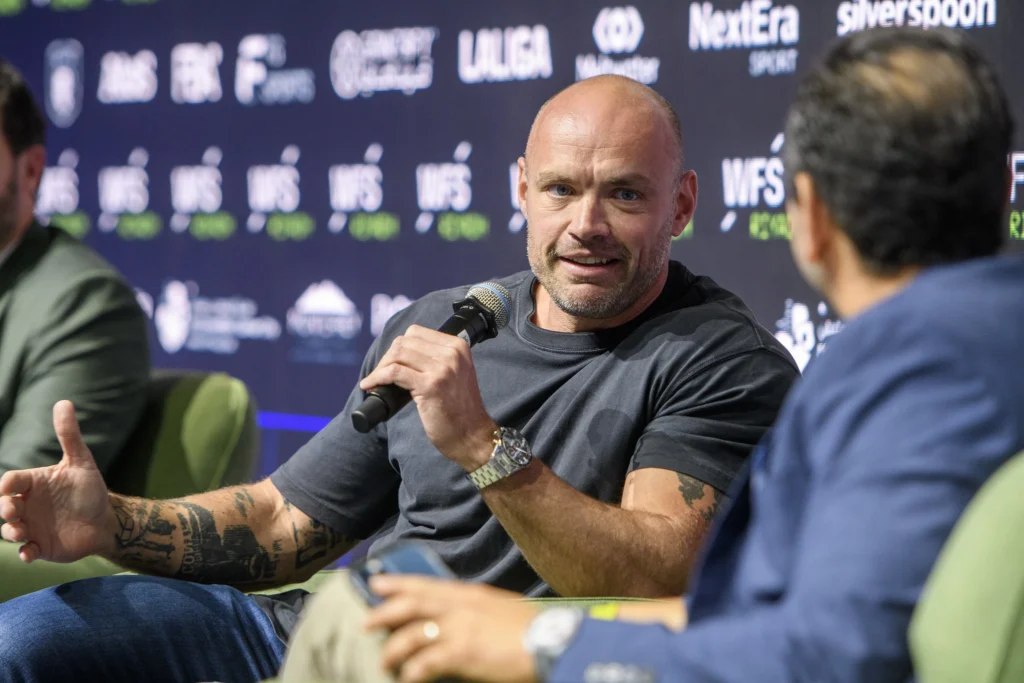
That was the focus of a panel presented by AWS at WFS Riyadh, moderated by Amr Rawi (CEO, Game Changers), featuring Dave Mace (AWS) and Khaled Basyuni (Head of EMEA for Bundesliga). The discussion centred on how a long-term technology partnership can support a league’s fan-centric strategy in practical, measurable ways.
Starting with shared priorities
Mace described a working model based on alignment around objectives rather than tools. Before defining technical solutions, AWS worked with the Bundesliga to understand what the league was trying to achieve from a fan and business perspective.
“We work backwards from that we don’t even touch the technology conversations at first it’s literally understanding the business what are you trying to do.” — Dave Mace
That ambition has remained consistent since the early workshops that launched the partnership in 2020: engaging a global audience while preserving the Bundesliga’s identity as a fan-focused competition. The collaboration was structured around three interconnected areas — media production, fan engagement, and data and analytics — developed progressively and refined over time.
This approach allowed the league to evolve its digital products without disrupting the live football experience.
From data generation to product delivery
The Bundesliga now generates around 3.6 million data points per match, captured through live tracking and positional systems. On their own, these numbers have limited value. Their relevance comes from how they are processed, interpreted and delivered.
Each match produces 16 Bundesliga Match Facts, distributed in real time through the league’s own platforms. These insights are designed to add context to moments on the pitch, helping fans understand why an action is difficult, unusual or decisive.
Basyuni linked this directly to fan behaviour, pointing to a 23% increase in app usage and time spent driven by the availability of live, in-game insights.
Choice as a core design principle
Another theme running through the panel was control. Rather than guiding fans through a single narrative, the Bundesliga is building experiences that allow users to decide what they want to follow during matchday.
Basyuni described a viewing model that offers an overview of all games while enabling fans to prioritise specific events, teams or players. Goals, red cards or tactical developments can be surfaced according to individual preference, giving fans the ability to shape their own experience without breaking the live nature of the competition.
“You are in the director’s role for your own viewing experience. so you get to customize it and personalize it to how you want to consume that content not how you are told to consume that content.” — Khaled Basyuni

Context over volume
Throughout the discussion, both speakers emphasised the importance of grounding data in football expertise. Mace explained how AWS combines analytics with input from coaches, players and referees to identify which moments are genuinely meaningful.
Historical archives and live positional data are used to build models that surface insights in real time, offering context rather than distraction. Mace illustrated this with a specific goal by Joshua Kimmich that carried only a 0.8% probability of scoring:
“If that goal goes in you realize it’s a rare opportunity and it’s a real skill set that kimchi’s just turned around and banged it in the top corner. but that’s a story… give that to the commentator give me a replay tell me how difficult that was story story story insight.” — Dave Mace
The aim is not to overwhelm fans with statistics, but to deepen understanding of the game as it unfolds.
Cross-industry influence
The partnership also benefits from AWS’s work across gaming, media and live entertainment. Technologies such as real-time rendering, interactive overlays and 3D environments are already familiar to fans through other digital experiences.
“We bring in people who are working on fortnite and unreal engine and things like this and we’re saying tell us what you’ve been doing and vice versa… it just made sort of common sense to mix these together.” — Dave Mace
In the Bundesliga’s case, these tools are adapted selectively, supporting new ways of explaining and visualising football without altering the sport’s tempo or structure.
Implications for leagues and rights holders
The Bundesliga–AWS partnership illustrates a more advanced stage of football’s engagement with technology. Data is treated as a product input, platforms as strategic assets, and personalisation as an outcome of design rather than an isolated feature.
For leagues and rights holders, the case highlights how sustained collaboration between a sports property and a technology partner can lead to fan experiences that are relevant, scalable and measurable — while remaining grounded in the live match.