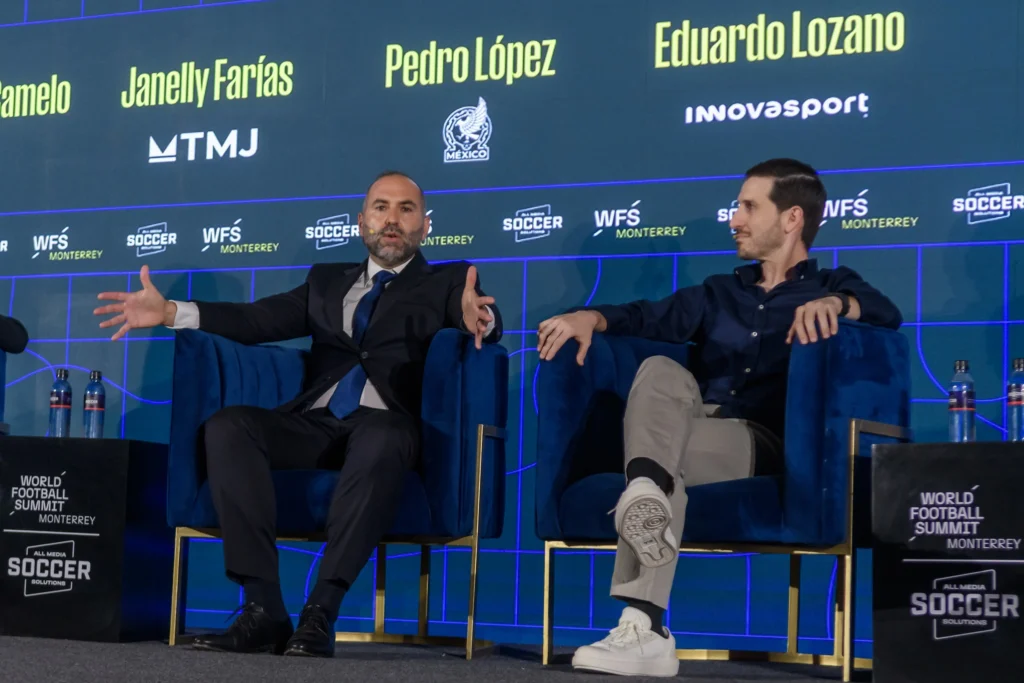
When women’s football jerseys in Mexico started outselling several of their male equivalents, someone had to start paying attention to the data. Eduardo Lozano, Head of Football at Innova Sport, was one of the first to articulate them publicly: the women’s category is registering a compound annual growth rate of 130 to 135%. This is not an aspirational figure. It is a trend line at the cash register.
That number was the starting point for a broader conversation at World Football Summit Monterrey 2025, where operators, marketing specialists and players came together to discuss women’s football from an angle that no longer requires any apology: the business case.
The model that made it possible
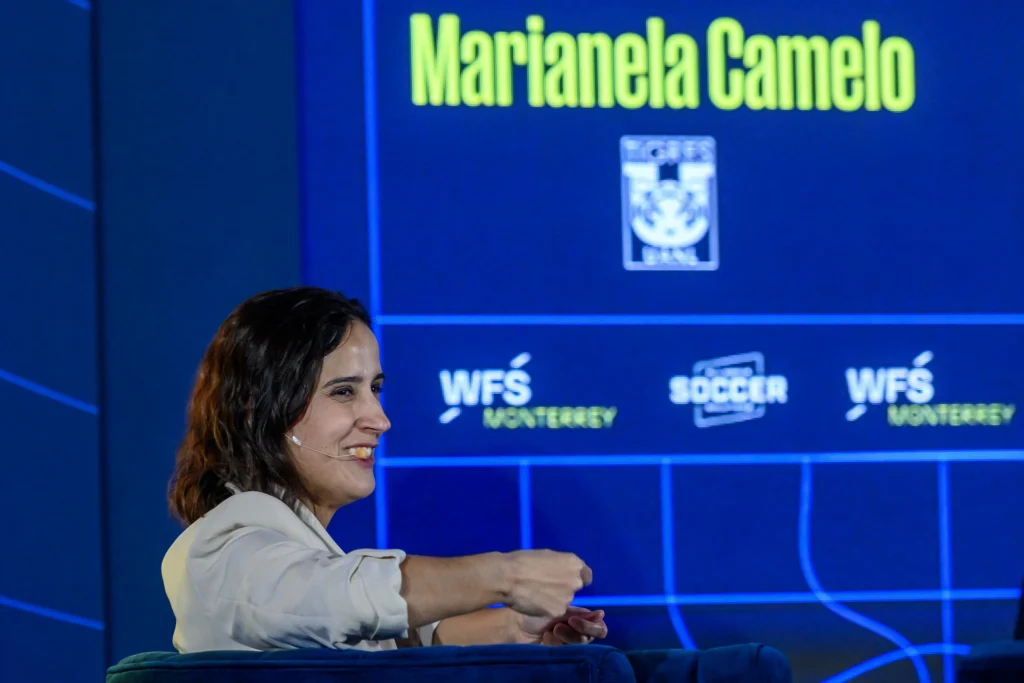
Behind the commercial growth lies groundwork that often goes unnoticed. Marianela Camelo, Operations Coordinator at Tigres Femenil, described it precisely: the project has spent eight years built on a non-negotiable premise — treating the women’s team to the same standards as the men’s. Dedicated training facilities, an exclusive pitch, and medical staff specialised in female physiology.
“It’s not charity… Tigres had something very important, which was vision… I think we have a gold mine here, because women’s football truly is a gold mine.”
Marianela explained that for the league to flourish, clubs needed to believe in it and execute plans that put the women’s team on an equal footing with the men’s in terms of resources and logistics.
The Liga MX Femenil tells a similar story at league level. By making games free to access and building a dedicated content strategy around fan behaviour, the league grew its audience from 10 million to 30 million viewers and doubled its sponsorship agreements. “We decided it was vital to democratise women’s football,” explained Mariana Gutiérrez, Director of Liga MX Femenil. “It’s about building community and giving players the big stage they deserve.”
What the brands are measuring
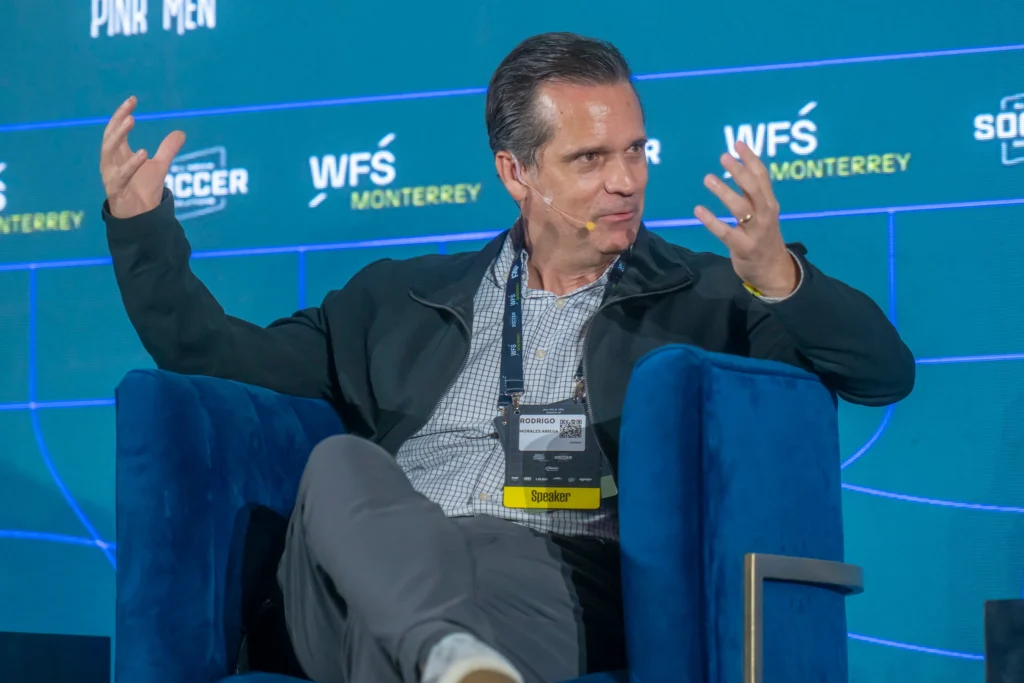
Rodrigo Morales, Senior Vice President Latin America at Wasserman, arrived in Monterrey with return-on-investment figures that reframe how sponsorship in this sector is evaluated. According to his analysis, investing in women’s football generates 35% more purchase intent than an equivalent sponsorship in men’s football. The average ROI for brands: between 15 and 18 to 1.
These are numbers that cannot be sustained by social responsibility narratives. They are sustained by real consumer behaviour, and that fundamentally changes the argument executives have to make in front of their boards.
For Alejandro Gesberg, Director of Connections and Sponsorships at Grupo Modelo, the next task for brands is concrete:
“The first thing we have to do is put players in the same spotlight where today nobody doubts who Héctor Herrera is. Why? Because there is a career, there is a following. We have to put the players in that spotlight, tell their stories and make sure they have that place.”
What only those who have lived it from the inside can see
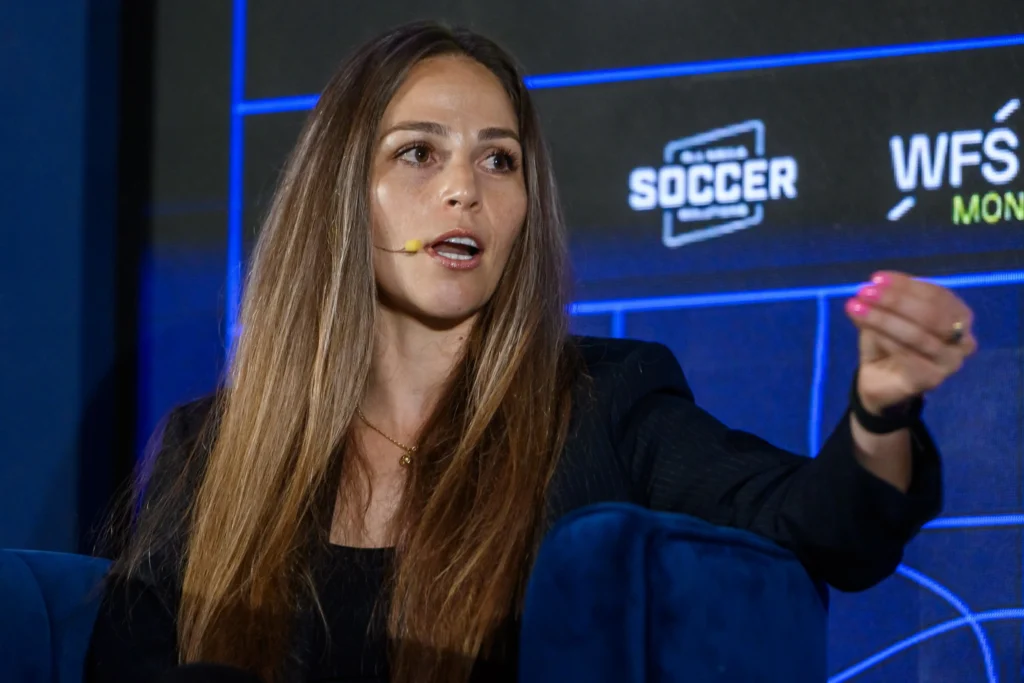
Janelly Farías arrived at the national team nine years ago without a club to play for. She was juggling three jobs just to keep training. Today she is a regular international and one of the most articulate voices on what has changed, and what still needs to. Her perspective is that of someone who has watched the industry transform from the pitch, not from a boardroom, and that is precisely why her figures carry a different kind of weight.
“The prize money for players in 2019 was 30 million and in 2023 it was 100 million — a 300% increase in four years. And the main sponsors of the World Cup contributed 300 million.”
For Farías, those numbers are not just a sporting achievement. They are confirmation of something that for years was treated as a risky bet:
“Today we have discovered that this is a business. The time to invest is now.”
And she sets one condition for that business to be sustainable:
“Before being footballers, we are people, we are human beings and we deserve to be treated as human beings.”
This is not a demand at odds with performance. It is her explanation for why the clubs that have built environments of trust, like Tigres, are also the ones accumulating titles and generating the metrics that brands now present in their boardrooms.
2031: a date that concentrates expectations
2031: a date that concentrates expectations
Mariana Gutiérrez does not shy away from the scale of what is coming: “I truly believe Mexico’s women’s side will be world champions long before the men’s.” It is a bold claim — and the data, increasingly, supports the ambition behind it.
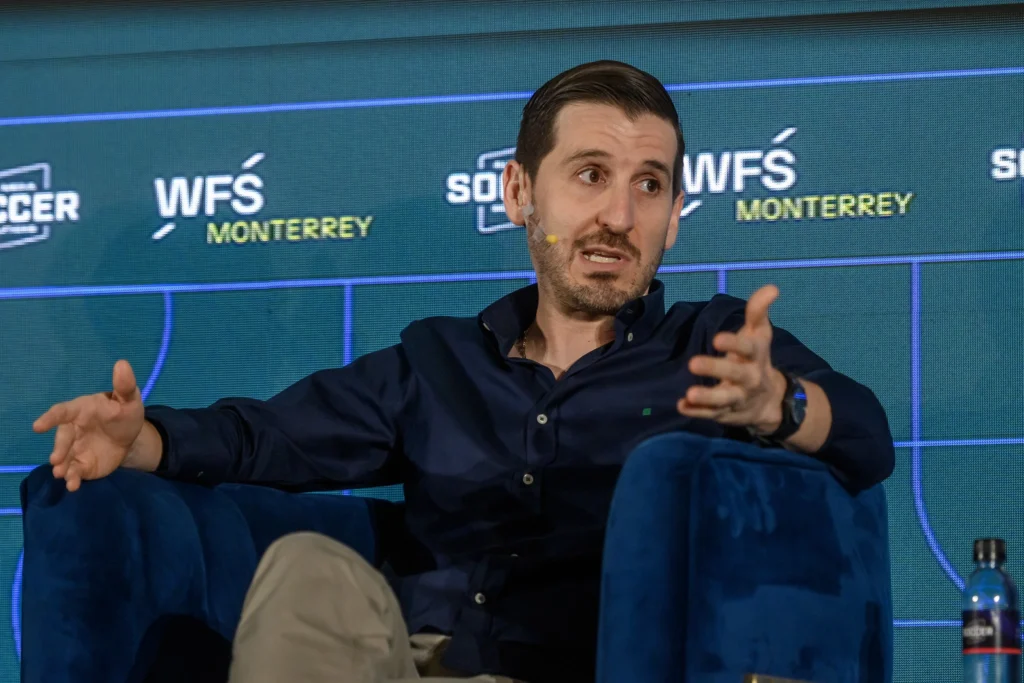
Coach Pedro López Ramos was direct: in 2031 Mexico will host the Women’s World Cup, and that event will act as an accelerator for everything already underway.
“In 2031, the Women’s World Cup will be held in Mexico… that is a reality. In 2031, women’s football in Mexico is going to boom.”
The conversation will continue. Women’s football will be back on the agenda at WFS Mexico City on June 3-4 at the Camino Real — taking place just weeks before the FIFA World Cup kicks off on Mexican soil, and at a moment when the industry’s most pressing questions are no longer about whether to invest, but how, and how fast.
The question that remains open is how many clubs, brands and investors will be sufficiently well positioned when that moment arrives, and how many will have taken too long to make the decision.