
While traditional football follows a century-old blueprint, World Sevens Football (W7F) has established a new commercial standard in record time. The recent Fort Lauderdale Grand Slam in December 2025 served as the ultimate proof of concept for this exclusively female 7-a-side format: San Diego Wave FC claimed the title and a $2 million winner’s prize from a total $5 million prize pool.
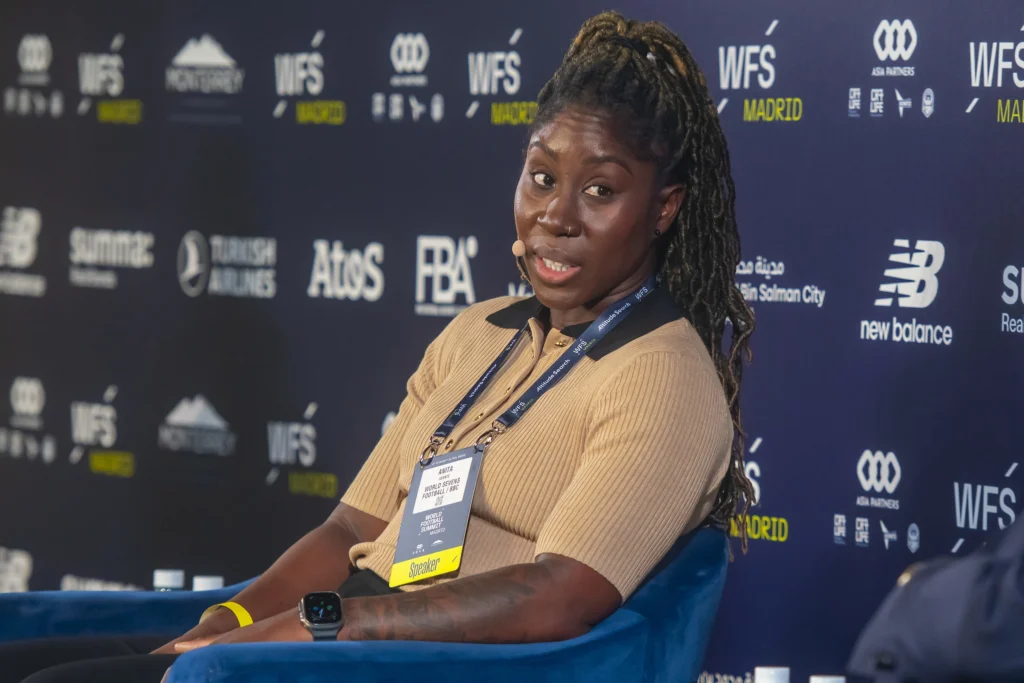
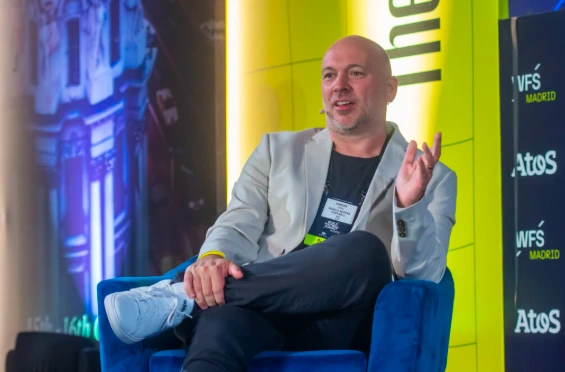
These figures are the result of a deliberate commercial playbook discussed by Adrian Jacob, Head of Football at W7F, and Anita Asante, member of the Player Advisory Council, during their respective sessions at WFS Madrid.
The Product Playbook: High-Impact Delivery
The speed of W7F’s success is rooted in a product designed for immediate engagement. It is not a domestic league, but a global circuit of “Grand Slam” tournaments held over 3-to-4-day windows. This concentrated format creates a “festival” atmosphere that is far easier to commercialise and broadcast than a traditional season.
Core Mechanics of the W7F Product:
- The Format: 7-v-7 matches on half-sized pitches, ensuring higher scoring and constant action.
- The Pace: Two 15-minute halves with rolling substitutions to eliminate downtime.
- The Tactical Edge: The removal of the offside rule is a specific choice to increase “action events”—goals and 1-v-1 situations—per minute.
- Elite Branding: Participation is limited to global giants (e.g. Manchester United, PSG, Bayern Munich), providing instant market credibility.
The “Player Playbook”: Co-Creation & Expression
A critical differentiator in the W7F model is the role of the Player Advisory Council. Far from being just participants, the players are integral to the product’s evolution. Anita Asante, a former England international, highlighted that the council was instrumental in validating the tactical changes to ensure they enhance the game’s essence.
“I grew up playing street football and five-a-side; that’s where I developed my skill,” Asante explained. “We wanted to give elite football a platform again to feel that enjoyment and fun aspect… where they can express themselves in a different fashion.”
This player-first approach extends beyond tactics. Jacob emphasized that W7F’s rapid digital success stems from allowing authentic expression:
“So many moments went viral because we let the players be themselves. We let the players enjoy it, literally just run wild, and their personalities shone through. The biggest asset that women’s football has is the players and the ex-players.”
This co-creation model ensures the format remains competitive and authentic while helping players drive their own global profiles.
The Financial Playbook: Moving Beyond Philanthropy
A key driver of W7F’s rapid scale is the shift away from “philanthropic” funding. Jacob argues that treating the sport as a charitable cause acts as a structural barrier to growth.
“There is a huge difference between philanthropy and investment,” Jacob explained, noting that the $5 million prize purse is a strategic tool designed to attract professional capital that expects a business-driven ROI.
Jacob’s position on women’s football funding is unequivocal:
“Football is a business. You invest in a business—you don’t say after six months, ‘Where’s my money? Why haven’t I got my profits?’ It’s a long-term gain. Women’s football has to stop being grateful for everything and start pushing. Not accept everything because ‘that’s how it’s been done,’ but really say, ‘This is how we invest, this is what we want.'”
He draws a direct parallel to venture capital:
“If you invested in Uber years ago, the figures were awful for years. But you’re not asking for your money back. So why is it like that with women’s football? We need good long-term partners.”
The Growth Playbook: Tapping into “New Money”
W7F has successfully avoided competing for existing football budgets. Instead, its playbook focuses on attracting outside investors who may not have previously engaged with the 11-a-side game.
“We don’t want to take any money away from the space; it’s about bringing in new money,” Jacob stated.
This approach allows the format to tap into entirely different marketing budgets, expanding the total ecosystem rather than cannibalising it.
The Partner Playbook: A Blank Canvas for Innovation
Through a partnership with DAZN, W7F focuses on “snackable” content that aligns with modern digital habits. Jacob argued that the format offers a “blank canvas” for innovation, where partners like Ally and Invisalign move beyond static advertising to focus on deep digital integration and immersive fan experiences.
The Road Ahead
The roadmap for W7F involves establishing a consistent global circuit that occupies a permanent slot in the professional calendar. As Asante noted, the ambition is to expand to markets like Africa and Southeast Asia, exposing more young women to elite sport. By treating the product as a professional business asset, World Sevens is demonstrating how new formats can reach new demographics and attract serious investment in the current global entertainment landscape.
🎥 Foundations of the Future: Grassroots, Performance, and the Evolution of the Game — Panel featuring Anita Asante at WFS Madrid: https://www.youtube.com/watch?v=HETUxX4su6U
🎥 Investment and New Opportunities in the Women’s Game: From Fan Interaction to Brand New Formats — Panel featuring Adrian Jacob at WFS Madrid: https://www.youtube.com/watch?v=tuMPnGDzALo