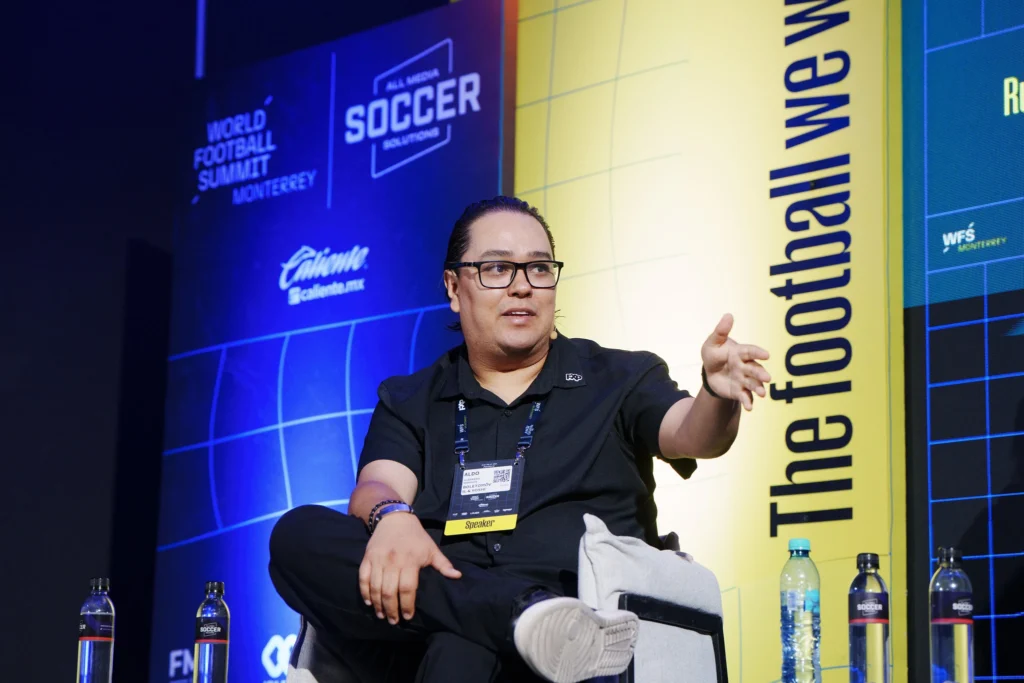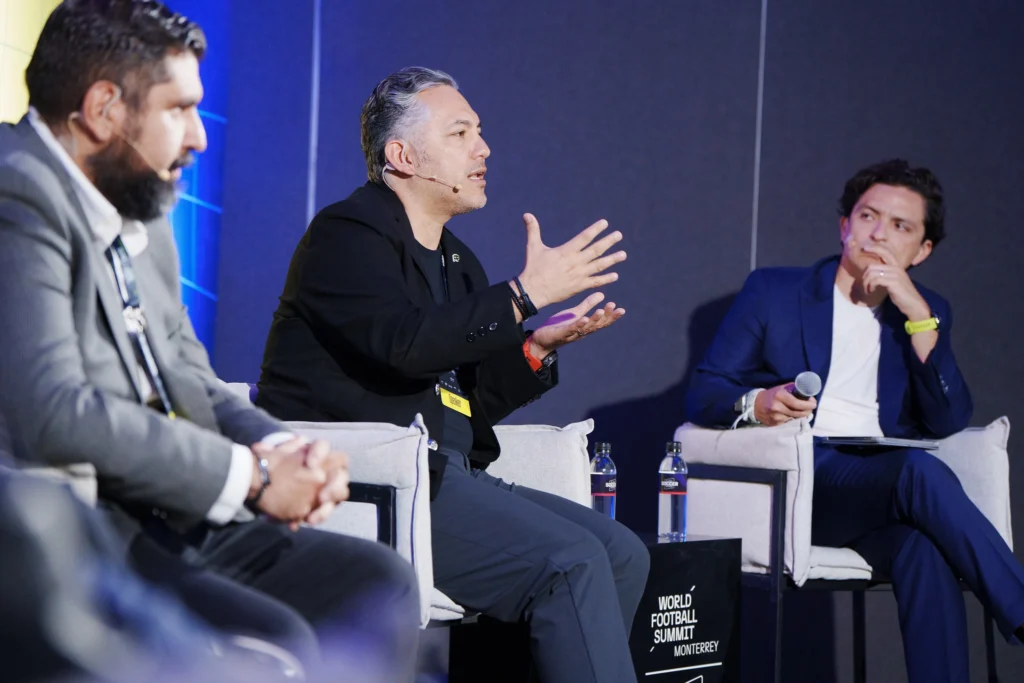
Club Tigres has 41,000 season ticket holders and a waiting list for when one becomes available. Their stadium has been sold out for years. By any conventional measure, their fan relationship is not a problem to solve.
And yet Miguel Hernández, Brand Director at Tigres, keeps coming back to a number that bothers him: 12 million. That’s how many people follow Tigres on social media. People who watch the games, know the squad, call themselves fans — but who the club knows almost nothing about.
Hernández was speaking at WFS Mexico 2025, where fan data and personalisation featured prominently across panels featuring executives from Tigres, Toluca, Chivas, the Monterrey 2026 World Cup Host Committee, Ticketmaster and several technology platforms working with Mexican football properties. The question that kept resurfacing was not whether clubs should be collecting fan data, but what they are actually doing with it.
“Between those 41,000 and the millions we had everywhere else, there was a gap. And we asked ourselves: how do we get people closer?”
Their answer was a registration programme that has now brought 550,000 fans into direct, personalised communication with the club. Not a newsletter. Not a loyalty card. One-to-one communication built on data that tells the club who each person actually is — not just that they exist.
Hernández calls it fan intimacy, a term he acknowledges makes people uncomfortable.
“The relationship a club has with its fans is like the one a person has with their partner or their friends. It has highs and lows, failures and successes. You have to stop being afraid of that word.”
The nickname that changed everything
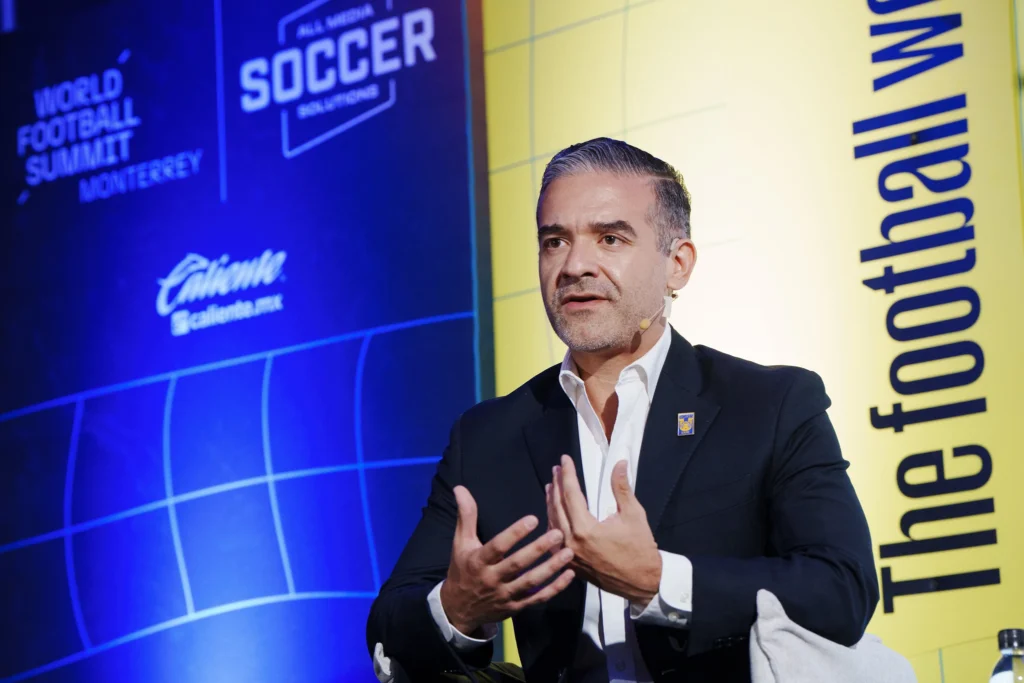
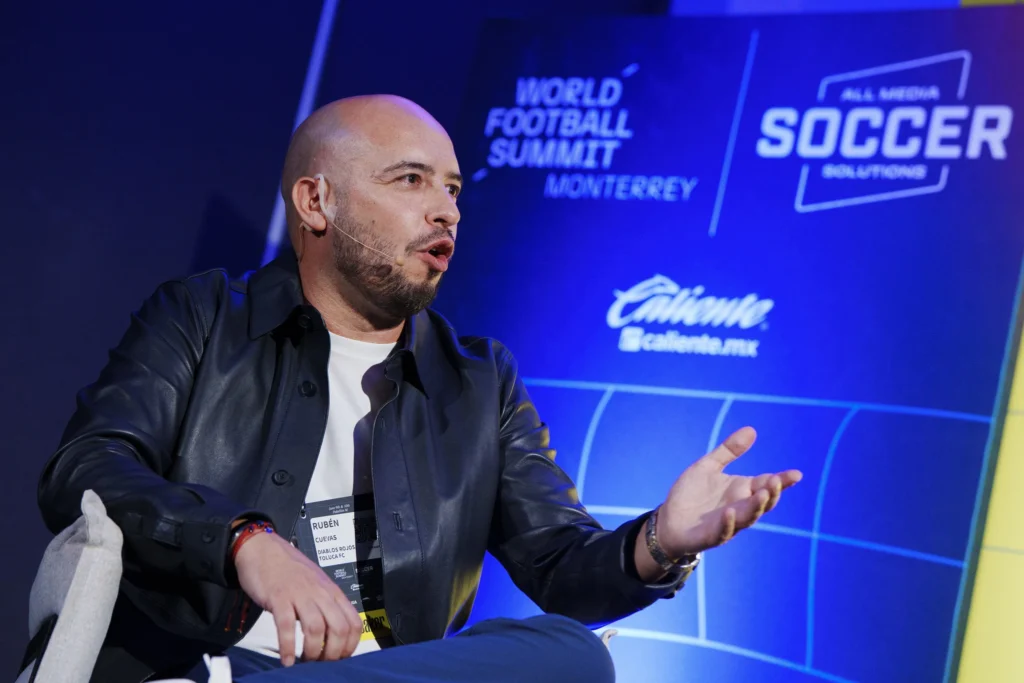
Rubén Cuevas, Director of Marketing, Commercial and Fan Experience at Club Toluca, took it further. His team asked fans a question with nothing to do with transactions or attendance:
what do your friends and family call you?
“The next communication we sent them was through their apodo. We don’t greet them as ‘Hello Aldo.’ We greet them as ‘Hello, Diablo Mayor.’ And that changes everything — the fan suddenly feels at home.”
The results sit alongside three years of sustained work: season ticket holders grew from 5,000 to 21,000. Email open rates doubled. Cuevas is careful not to attribute everything to one title win — Toluca were champions two weeks before the panel. “We have to keep our feet on the ground. A title is a one-shot event. What makes me proud is the three years of work that got us ready to capitalise on it.”
Building a fan base for an entity that doesn’t have fans
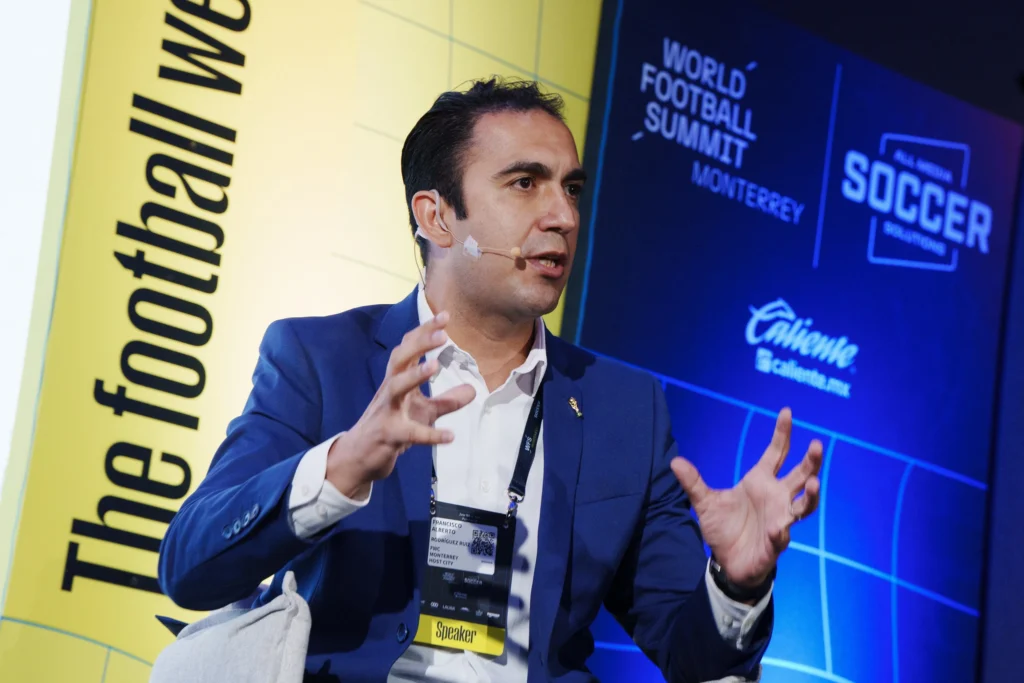
Francisco Rodríguez, leading commercial and rights strategy for the Monterrey 2026 World Cup Host Committee, had a more fundamental problem: his organisation had no fans at all.
“Nobody has a Host Committee flag on their bedroom wall. Nobody wakes up and says ‘I’m a Monterrey Host Committee fan, always have been.’ We had to figure out who our fans even were.”
Unlike a club, Rodríguez couldn’t use results or rivalries to generate engagement. He had to build excitement for something two years away and convert it into a commercial asset for sponsors who needed proof of audience before committing.
The Juego de Leyendas — a match featuring Xavi, Pirlo, and Buffon — became the proof of concept. In three hours, the committee generated 2,500 clean registrations through a gamified campaign. Embedded in the mechanic was a single question on behalf of a car sponsor: how soon do you plan to buy your next car? Of 2,500 participants, 470 said within six months.
“Those are qualified leads. That’s somebody who likes football, who came to meet these players, who wants to buy a car. I’m giving the agency everything they need.”
Context is what makes personalisation real
Héctor Romero, CEO of FXP, was direct: “Hyperpersonalisation without context doesn’t scale. You can have all the data in the world and still talk to someone at exactly the wrong moment about exactly the wrong thing.”
Santiago Montes from Chivas illustrated this during a difficult run of results, when the club launched the Chivas Esports jersey. Social media was off-limits given the sentiment around the first team. Instead, they identified a specific microsegment — fans who used the gaming arena inside the stadium — and reached them directly. The jersey sold.
“The channel became the main sales driver. Not social media. Not a campaign. The right message to the right person at the right moment.”
Who inside the organisation is actually responsible for this?
Aldo Guerrero of Boletomóvil drew a parallel with the community manager role. Ten years ago it didn’t exist as a dedicated function. Today every serious club has several people doing it. His argument: data specialists are on the same trajectory.
“In the next three to five years, the clubs that have people who know how to humanise all of this will be ahead. The ones that wait will be hiring in a panic.”
The sessions at WFS Mexico didn’t produce a unified methodology. What they did illustrate — across a sold-out club, a recently crowned champion, and a host committee building from zero — is that the distance between having data and doing something useful with it remains significant. And that closing it has less to do with technology than with the decisions made around it.