
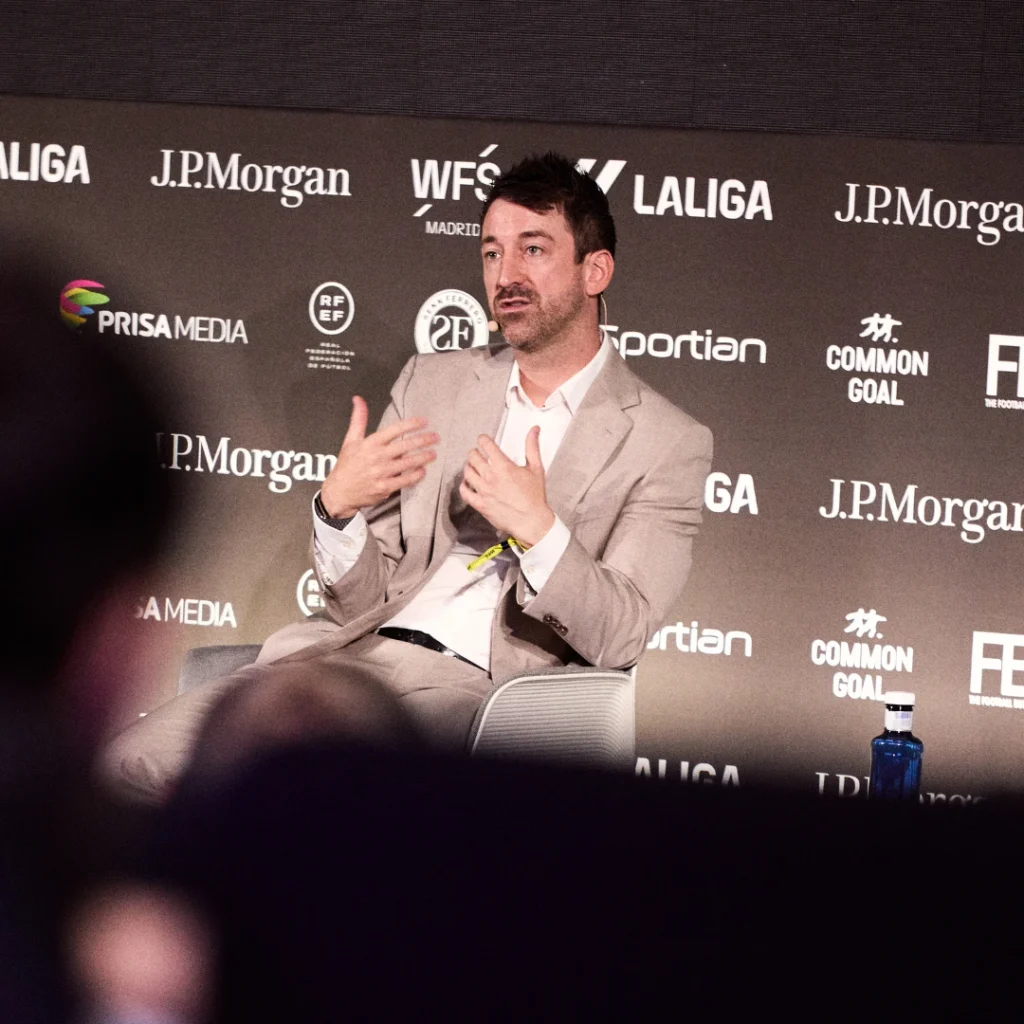
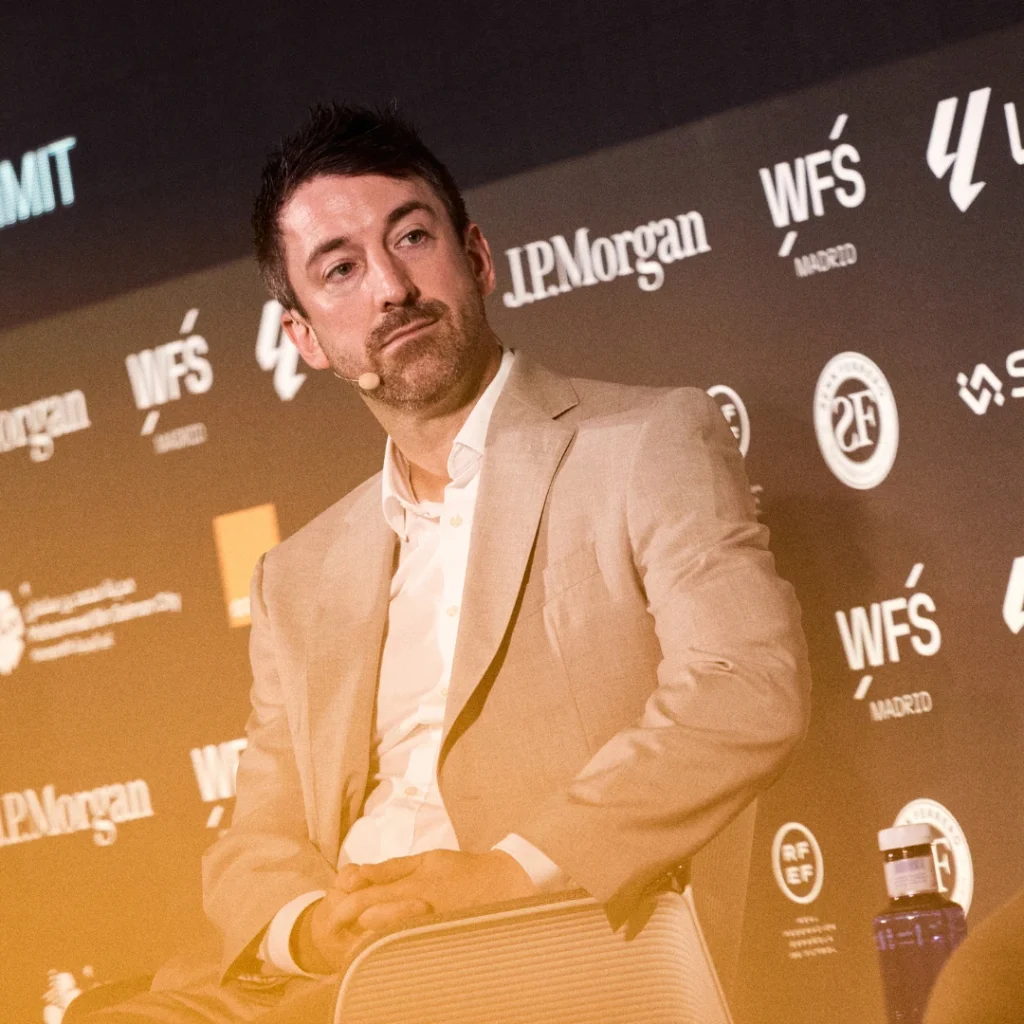
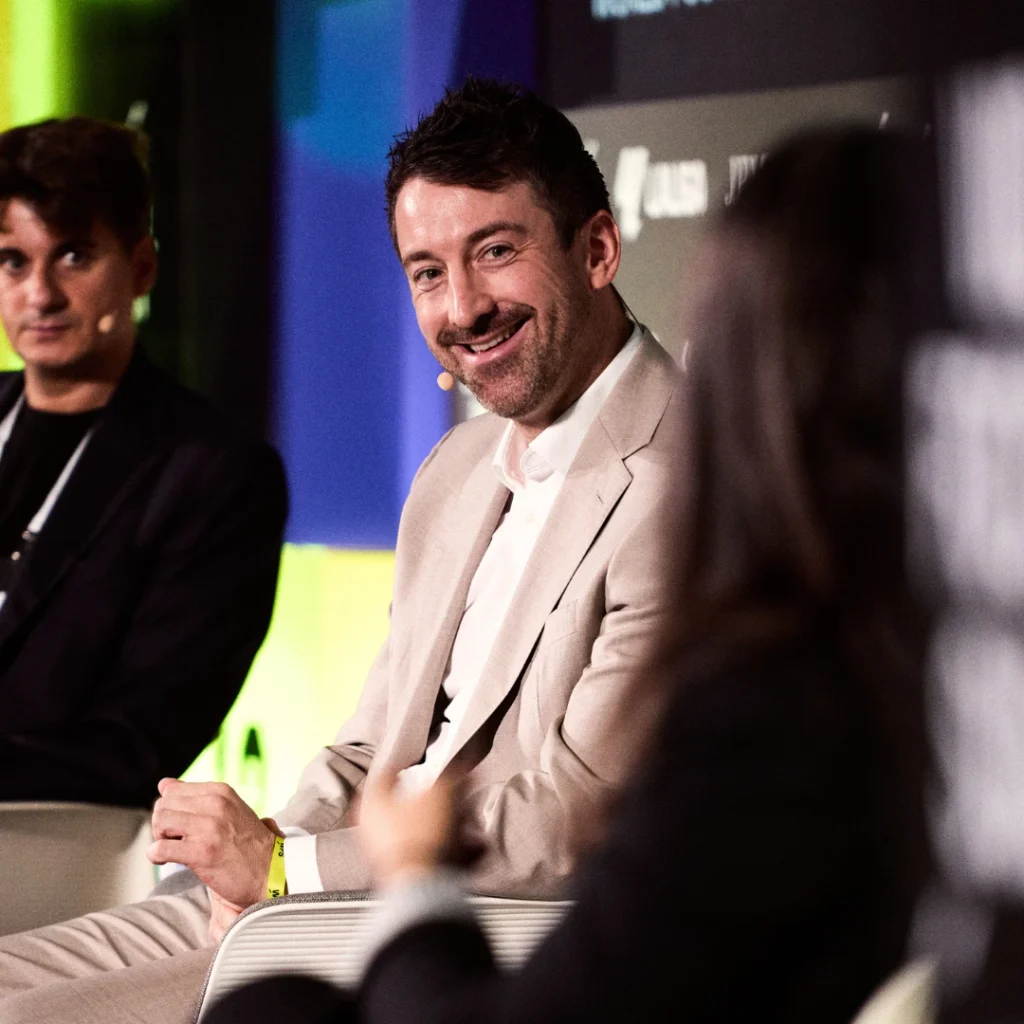
Over the past eight years, Eintracht Frankfurt has built in-house the technology behind its ticketing, content, online shop and app, and has started selling it to other sports organisations. At WFS Madrid 2026, Timm Jäger, Chairman of the club’s Digital Advisory Board and CEO of its technology subsidiary, EintrachtTech, explained the thinking behind that strategy and what the club learned along the way. “We probably made every mistake possible over the last eight years,” he said.
Jäger speaks from a club that had to find its own route. When Eintracht began the project in 2017, it had nearly been relegated to the second division, and growing its audience was not the first concern. German football’s membership model also shapes its options. Jäger does not see it as a disadvantage, but the club has no private equity or foreign funds behind it , and competing with larger European clubs meant, in his words, that “we had to be more innovative on the money generation side” .
Building before reaching
Eintracht started with the infrastructure. In Jäger’s view, any club, whatever its size, has to control three processes where it generates data and gets to know its fans: content, ticketing and merchandise. The club set up its own technology subsidiary and developed its data platform, ticketing system, content management, online shop and front ends in-house. Today it knows which content a fan reads, which products they look at and which tickets they buy , for football matches and for the concerts held at its stadium.
For Jäger, that is ordinary practice in any other company. “If you don’t understand your customer, then sooner or later you’re gone,” he said.
A marketplace inside the app
With the platform in place, Eintracht opened it to its commercial partners. The club now works like a small Amazon-style marketplace, Jäger explained: it sells insurance products from its insurance partners and earns a commission, integrates content from Germany’s largest newspaper and gets paid for it, and sells Sky subscriptions.
The revenue has a single destination. “We don’t have any donor that wants money back,” Jäger said. The money the technology generates goes to the sporting department.
Data before design
Among the mistakes, Jäger singled out the starting point. Eintracht began with the front ends, how the app and the website should look, because that is the most attractive part for fans. “Every design agency can do that,” he said. What mattered more, he argued, was a clear data strategy: deciding which data the club wants to generate and how.
One decision illustrates it. Eintracht placed a single sign-on in front of its app, as Netflix, TikTok or Instagram do, so every user has to register first. Being logged in is what allows the club to personalise content and advertising and to treat each fan differently.
From club to supplier
In February 2026, Eintracht presented Stackwork, the company through which it now offers its technology to other organisations. According to Jäger, the clients already include Rapid Vienna, the German handball association, one of Germany’s biggest racetracks, and ice hockey and handball teams. In October 2026, Rapid announced that its app and its data platform, which combines data from the club’s existing systems into a single profile for each fan, already run on Stackwork, with the online shop added from the 2026-27 season.
For Jäger, the value lies in where the product comes from: “a tech solution out of the sports industry for the sports industry”, built by a club that has already tested what works and what does not.
Agents after apps
The next stage is AI, applied to that data. The sequence matters to Jäger: understand the fan first, “and then apply AI to the data”. He accepts that fans will use ChatGPT or Claude to look for information about the club, but Eintracht is building its own agents with companies such as OpenAI and plans to offer agent-based services through its app. “We all think probably that there won’t be apps any more in the future. It will be AI agents or something like that,” he said. The aim is to keep fans within the club’s own environment for as long as possible.
None of this happens without investment. “Professional sports organisations don’t like to spend money in areas which are not professional football players,” he noted. For him, clubs need a data strategy and a business plan that shows how technology creates new revenue or protects existing income. “I’m 100 per cent convinced that if we are not changing as a sports industry, the money will go somewhere else,” he said.