
The second day of WFS Mexico City 2026 brought together club executives, data specialists and sports infrastructure experts at Camino Real Polanco to debate how the football industry can translate recent years of growth into more sophisticated and sustainable business models. The shared diagnosis in the room was clear: the tools exist, but the ability to use them remains uneven.
Capturing fan data is now a widespread capability across the industry. The challenge is what comes next: how to process that information, interpret it and turn it into revenue. Club América has become one of the leading references in the region. After years building a data strategy around its fan base, the club has repositioned its value proposition for brands.
“Club América today is not just a football club. It is a new media channel for brands”, said Jorge Balandra, the club’s Commercial Intelligence Director. Brands, noted Baptiste Maurel, Marketing Director, are no longer looking only at follower counts. They want to know what fans consume, when they come to the stadium, what they do outside of it.
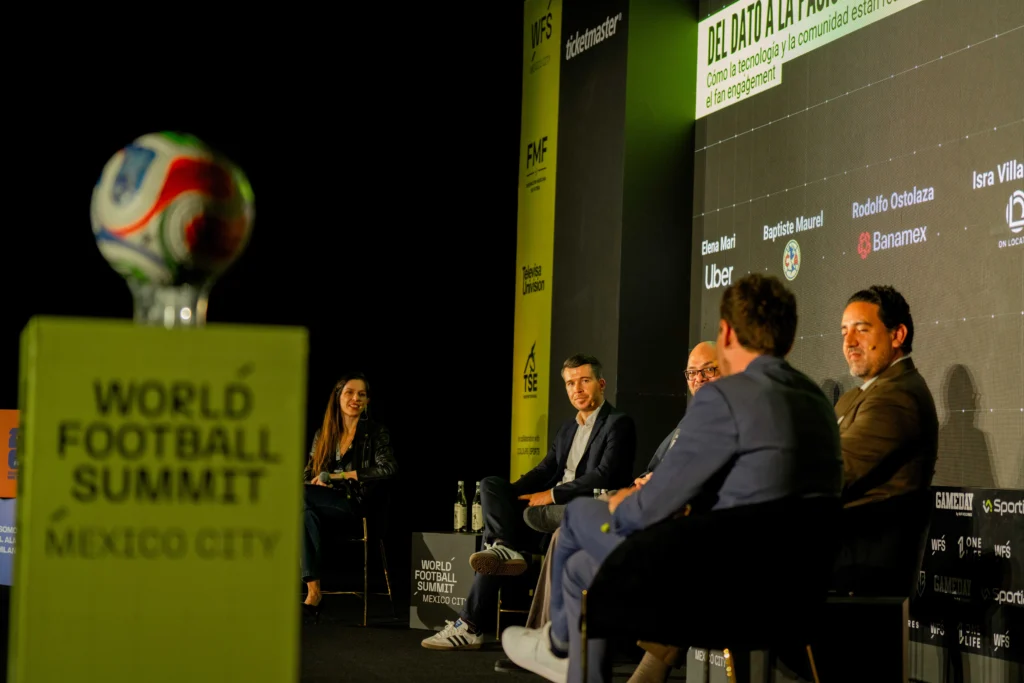
The other challenge is the fan who does not yet exist: the generation consuming content on platforms that traditional football has barely begun to master. Alejandro Lesende, Chief Finance and Administration Officer at Concacaf, presented the case of Concacaf Kickoff, a brand built specifically for teenagers and children — developed with them, not for them.
“We built this brand with young people. The look, the colours, all of it was done with kids. We didn’t bring in agencies of old men who’ve been doing marketing for decades”, said Lesende. Juan Diego García, CEO for Iberoamérica at GGTech Entertainment, warned of the cost of failing to act with urgency: gaming audiences now exceed those of the FIFA World Cup and the Super Bowl: “Let’s not fight something that is going to be much bigger than us. Let’s understand that we have a real opportunity here.”
The full match is no longer the product
That same generation — the one that does not watch ninety minutes and grew up consuming fragmented content across multiple platforms — is also reshaping the broadcasting model. “The full match is the foundation — but it’s not the main product anymore”, said Kelly Shouldice, VP of Brand and Content at Northern Super League. “The younger generations are not watching ninety minutes. They want the stories around it.” Sascha Fussmann, founder and CEO of One Life Agency, pointed to where value is shifting: “People want to follow people. Whoever manages to sell the perspective of a player and own the full content storyline — that’s going to be the winner.”
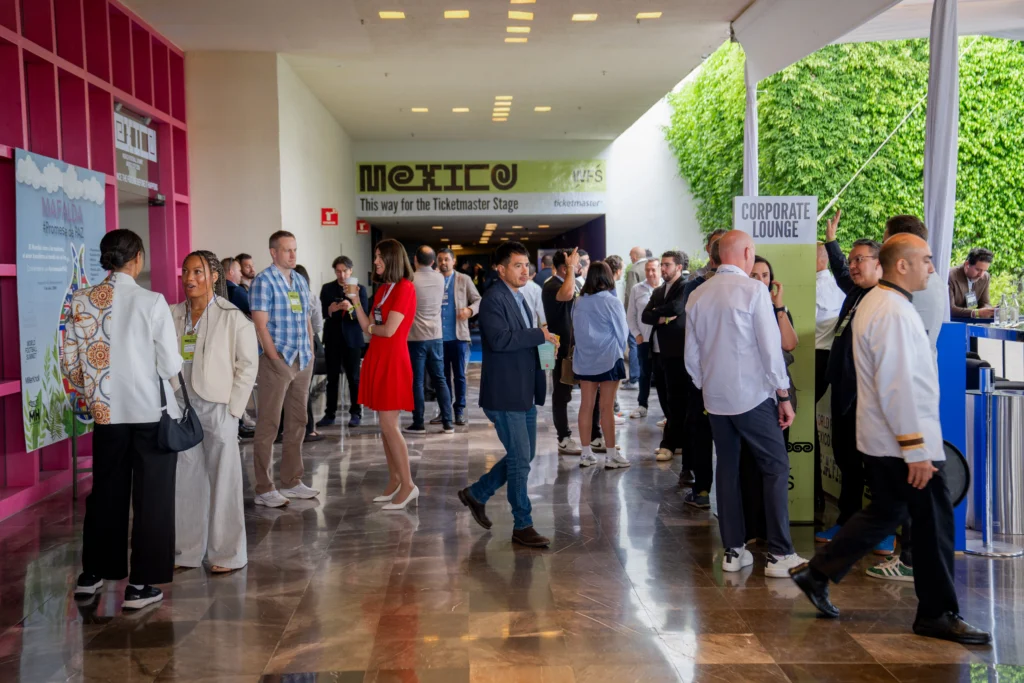
The model built around the match as the central and sufficient product faces the same challenge inside and outside the stadium. If the fan is no longer activated by live broadcast alone, the venue cannot depend solely on ninety minutes either. “The big revenue has to come from what the stadium is used for ten minutes after the final whistle”, said José Ramón Fernández, General Manager at Grupo Pachuca. The model debated in the room points toward integrating the stadium into a broader urban ecosystem — housing, retail, hospitality, offices — that generates value 365 days a year.
The day also covered other ground — football’s role as a tool for community cohesion, officiating technology, and reaching the next generation of fans — completing a session built around a single underlying question: how does the football industry build business models that are worthy of the relationship it already has with its supporters.
